
Many educators run into predictable barriers: sensory overload from fluorescent lights and hallway noise, routines that shift without warning, materials that only work for one type of reader, and a pacing that assumes every brain processes information at the same speed. Add communication differences and the quiet assumption that one "typical" learner represents the whole class, and it's easy to see why adaptation matters.
This article breaks down what adaptive and inclusive teaching actually means, walks through instructional strategies you can use tomorrow, covers sensory-aware classroom design, and shows how to tell whether your adaptations are actually working.
Key Takeaways
- Adaptive teaching keeps learning goals fixed while adjusting instruction, pacing, and how students show mastery.
- Inclusion means belonging and participation, not just shared physical space.
- UDL, student voice, and collaboration reduce reactive, one-off accommodations.
- Sensory-aware classrooms offer choice and predictability, never isolation or a label.
What Makes a Classroom Adaptive and Inclusive?
An adaptive classroom runs on a loop: teach, observe, reflect, act. A teacher delivers a lesson, watches how students respond, interprets what's helping or hindering, and adjusts. Then the cycle repeats. That loop is continuous, not a one-time fix.

An inclusive classroom goes a step further. It supports students with and without disabilities learning, communicating, and building relationships together whenever appropriate, backed by individualized support where it's needed. One doesn't replace the other. You need both.
Adaptation, Accommodation, Modification, Differentiation
These terms get used interchangeably, but they're not the same thing:
- Adaptation — a broad term covering changes to instruction that provide access, including both accommodations and modifications.
- Accommodation — changes how a student accesses or demonstrates learning, without changing the expectation itself (extra time, audio format).
- Modification — changes the actual learning expectation or standard, and should align with a student's Individualized Education Program (IEP).
- Differentiation — adjusting content, process, or product to maximize learning for all students, not just those with identified needs.
The Four Components of Adaptive Teaching
Researchers at George Mason University, building on a research synthesis on teachers' instructional adaptations, describe adaptive teaching as four interacting parts:
- Classroom stimuli or outcomes — what students are doing, saying, or struggling with.
- Teacher reflection — interpreting that stimulus and deciding whether a response is needed.
- Teacher action — the actual instructional change.
- Teacher knowledge and context — beliefs, experience, and constraints like curriculum or testing pressure that shape what's possible.
Terminology shifts across sources, but the cycle is consistent.
Good adaptation decisions draw from a student's strengths, interests, communication style, sensory profile, and cultural background, not from a diagnosis alone. A strategy that works beautifully for one autistic student may do nothing for another.
Adaptive Teaching Strategies That Support Diverse Learners
Universal Design for Learning in Action
Universal Design for Learning (UDL) asks teachers to build in flexibility from the start, rather than retrofitting lessons later. The CAST UDL Guidelines organize this around three questions: why are students engaging, what are they learning, and how are they expressing it.
In practice, that looks like:
- Plain-language directions paired with visuals and modeling
- Audio, tactile, or hands-on materials alongside text
- Guided notes and captioned video
- Preteaching key vocabulary before a lesson, not after confusion sets in
The learning objective stays the same. The route to it doesn't have to.

Flexible Pacing, Grouping, and Response Options
Not every student needs the same amount of time or structure. Flexible pacing might mean:
- Chunking a long assignment into smaller steps
- Building in planned pauses and visual schedules
- Giving extra processing time before expecting a response
- Letting students move between independent, partner, and teacher-supported work
Students should also have more than one way to show understanding: speaking, writing, drawing, building a model, or recording a response. The goal is genuine assessment of learning, not just an easier version of the task.
Formative Assessment That Adjusts in Real Time
Ongoing check-ins matter more than a single end-of-unit test. Quick observation, brief conversations, work samples, and student self-reflection all tell you whether to reteach, change how you're presenting material, or challenge a student who's ready for more.
A quick example: In a science lesson on states of matter, one teacher paired visual step-by-step instructions with a hands-on ice-melting demonstration. The plan also included a quiet corner for students who wanted less noise, preteaching of words like "evaporation," and response options through writing, drawing, or explaining out loud. No single student was singled out. The options simply worked better for more of the room.
Designing a Sensory-Aware Classroom Environment
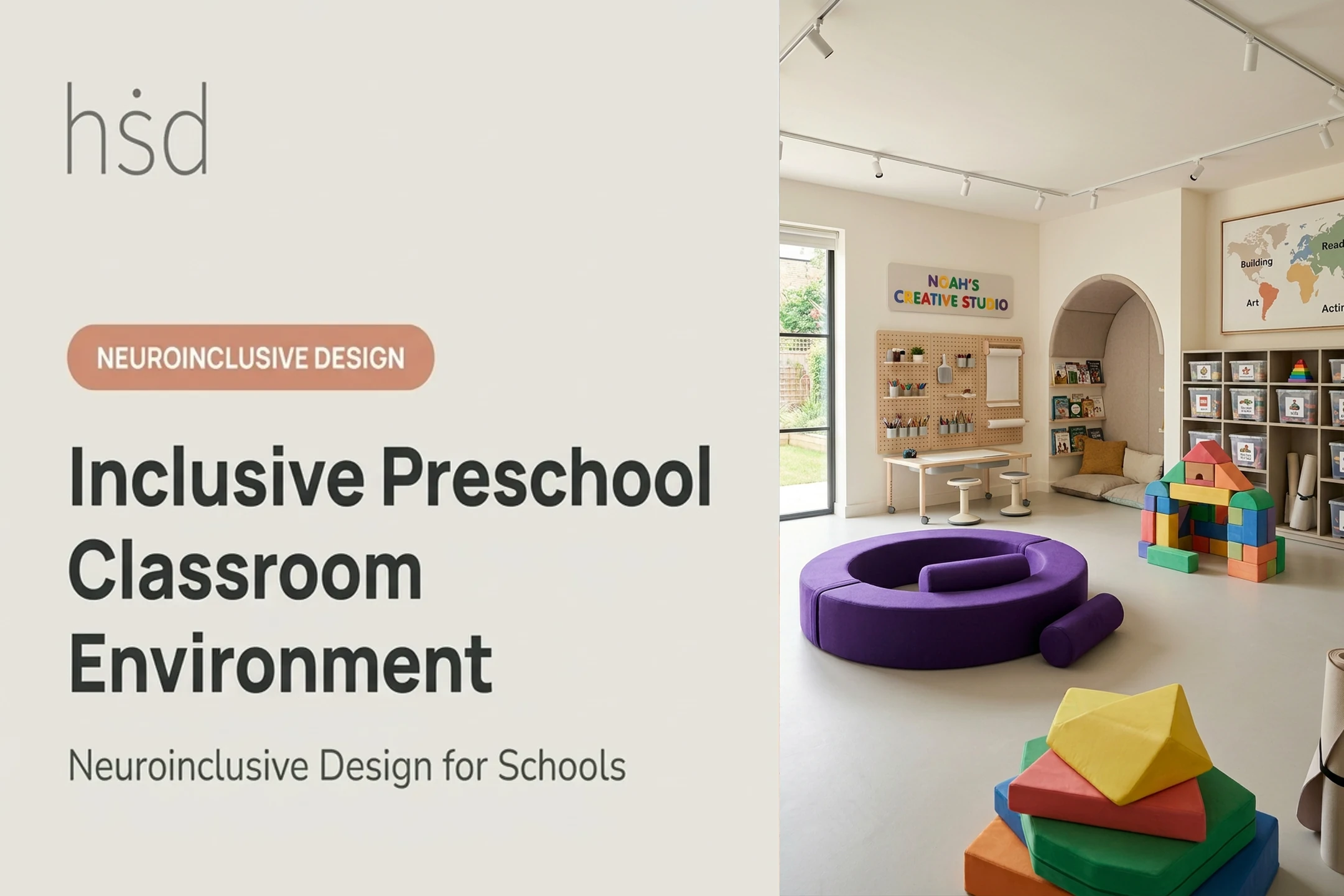
Sensory conditions shape attention and regulation more than most lesson plans account for. Noise, glare, visual clutter, temperature swings, and crowding can all interfere with a student's ability to focus. Not every neurodivergent student reacts to the same triggers.
What Actually Affects Sensory Comfort
Research on classroom acoustics points to echo and HVAC noise as some of the most disruptive sound sources, often amplified by hard surfaces, metal furniture, and high ceilings. A 2017 study also found that heavily decorated classroom walls pulled attention away from instruction for all children, with a stronger effect for children with autism.
Practical Environmental Strategies
- Reduce unnecessary visual and auditory stimulation (rotate wall displays instead of covering every inch)
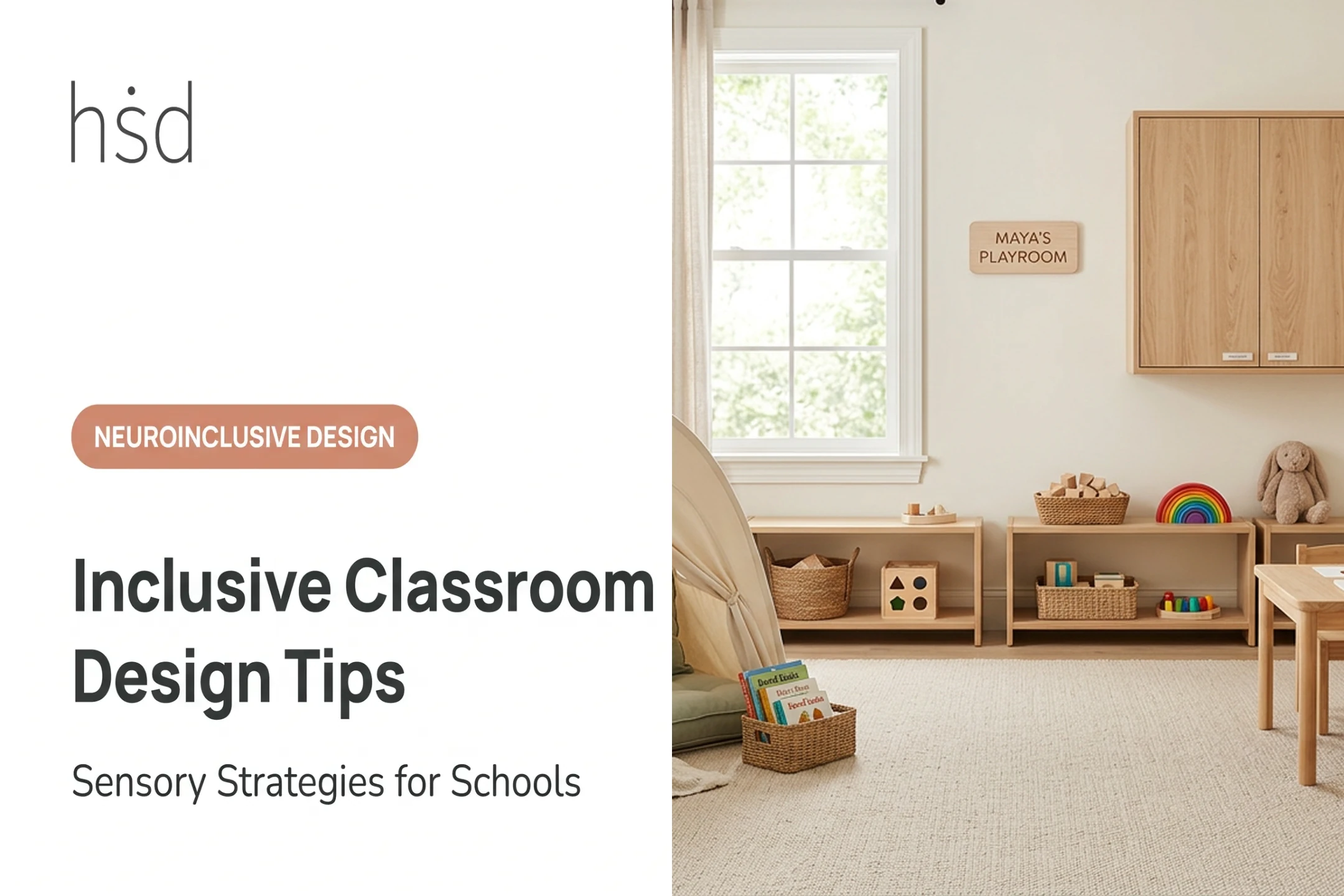
- Keep spatial organization consistent so materials are always in the same place
- Prefer natural or indirect light over flickering fluorescents
- Create clear, uncluttered pathways and offer seating choice
The peer-reviewed ASPECTSS framework for autism-friendly school design outlines seven principles, including acoustic control, sensory zoning, and dedicated transition or escape spaces. Researchers describe the results as promising, though not universal.
Regulation Spaces and Predictable Transitions
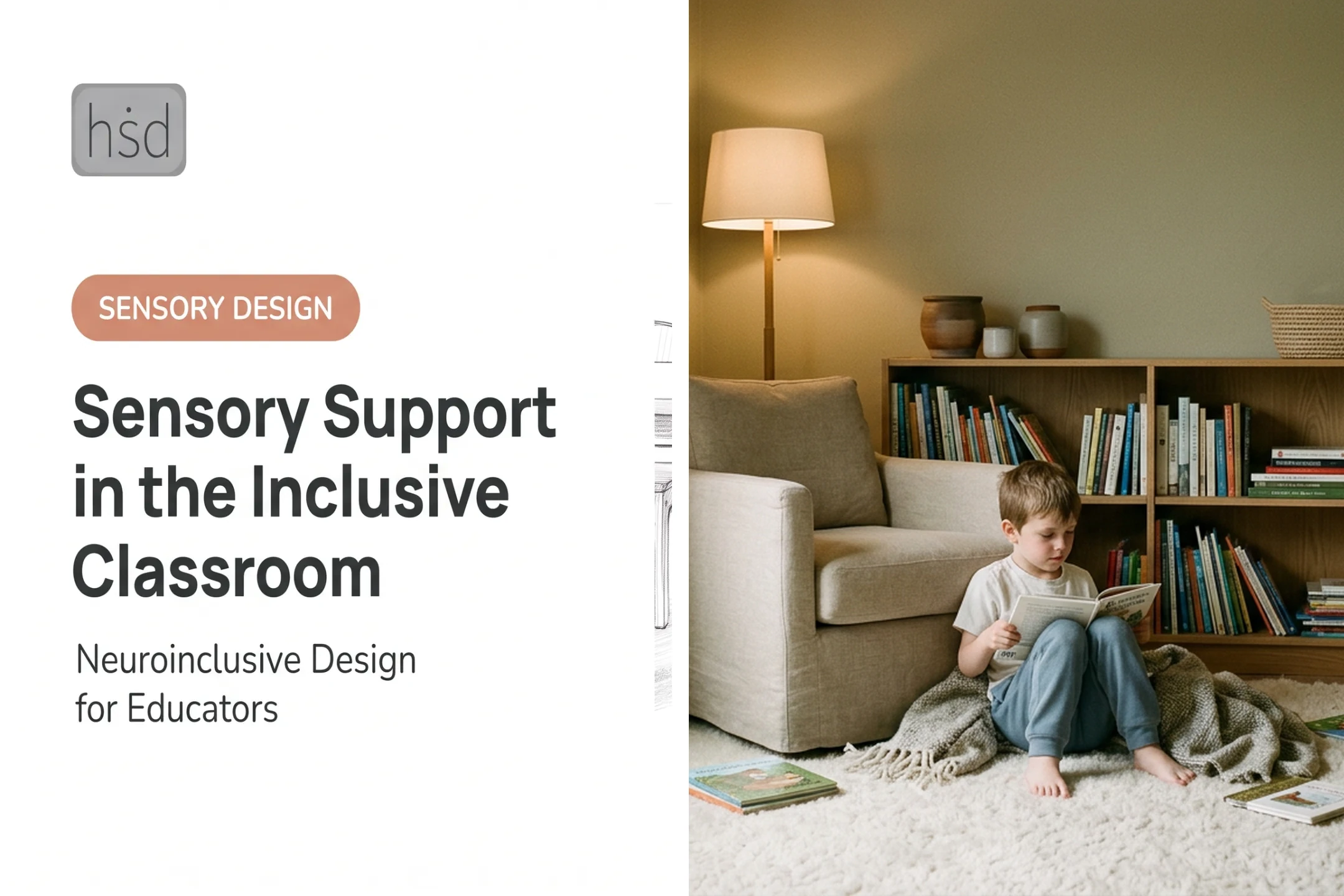
A regulation-supportive area should be an available option, never a punitive time-out corner. That means clear access, appropriate supervision, an easy way to re-enter the group, and student choice about when to use it.
Predictability matters just as much. Visual schedules, advance notice of changes, transition warnings, and simple "first-then" language reduce anxiety before it builds.
Quick sensory audit: can every student
- See and hear instruction clearly?
- Move around the room safely?
- Access materials independently?
- Request a break without drawing unwanted attention?
- Work at a sensory level that suits them?
Schools and pediatric therapy clinics working through more complex sensory-aware planning often bring in outside expertise. Highly Sensitive Design, a multidisciplinary firm approaching spaces through architecture, education, and neuroinclusive design, is one option for schools looking to map sensory conditions and identify practical adjustments across a classroom or building.
Building Inclusive Routines and Collaboration
Predictable routines do more than keep a classroom running smoothly. They reduce the constant burden on students to explain their needs over and over. When expectations are taught explicitly, and language stays respectful, students spend less energy guessing what comes next. Those same routines work best when adults share the load instead of leaving inclusion to one person.
Collaboration Without Overdependence
Inclusive classrooms rarely run on one adult's effort alone. Effective support usually comes from a team:
- General educators and special educators sharing planning time
- Paraprofessionals supporting specific tasks, not shadowing constantly
- Therapists contributing sensory or communication strategies
- Families offering context that doesn't show up in a file
- Students weighing in on what actually helps
Clear roles matter here. Support should build independence, not create reliance on a single adult in the room.
Student Voice as a Design Input
Ask students directly, and treat their answers as design input:
- What helps you focus?
- What communication method feels natural?
- What are your triggers?
- What are you interested in?
Document the answers respectfully, and revisit them as needs change. A strategy that worked in September might not fit by January.
That student-informed approach mirrors how Highly Sensitive Design shapes learning spaces: accommodate sensory needs, support social acceptance, and honor individual differences in the classroom the same way you would at home.
How to Implement and Evaluate Classroom Adaptations
A Step-by-Step Process
- Identify the barrier specifically: name what's blocking participation, not just "the student is struggling."
- Gather information from the student, family, and support team.
- Select a small number of adjustments rather than overhauling everything at once.
- Define the intended outcome before you start.
- Set a review date to check whether it's working.
What "Working" Actually Looks Like
Look for observable signs:
- Engagement and task completion
- Communication attempts
- Attendance and participation with peers
- Signs of regulation
Ask for student feedback directly. The IRIS Center recommends tracking objective, frequent data rather than relying on anecdotal impressions alone. That habit matters when you decide whether to keep, adjust, or drop a strategy.

Common Pitfalls
- Lowering expectations without a documented reason
- Relying on untested "sensory" products with no evidence behind them
- Using generic learning-style labels — a body of peer-reviewed research has found little support for matching instruction to a fixed "learning style"
- Removing a student from the group unnecessarily
- Treating one successful strategy as permanent, without revisiting it
IEPs, Section 504, and ADA: A Quick Note
Legal responsibilities under IDEA, Section 504, and the ADA vary by student and setting. This article covers classroom strategies, not legal guidance. Always verify current requirements through official sources, and treat these ideas as a supplement to, not a replacement for, a student's individualized plan or professional advice.
Frequently Asked Questions
What are the four main components of adaptive teaching?
Most frameworks describe four components: classroom stimuli or outcomes, teacher reflection and decision-making, teacher action, and teacher knowledge or context. Exact terminology varies by source, but the cycle stays consistent.
What does "adaptive" mean in an IEP?
"Adaptive" refers to individualized adjustments to instruction, supports, goals, services, or how a student demonstrates learning. Review the specific language in your student's IEP with the school team, since usage varies.
How do you create an adaptive and inclusive classroom?
Combine accessible lesson design, flexible participation options, predictable routines, sensory supports, and student voice. Then review and adjust regularly through collaboration with the full support team.
What is the difference between adaptive teaching and inclusive teaching?
Adaptive teaching is the ongoing adjustment of instruction based on how students respond. Inclusive teaching ensures access, belonging, and participation for all learners within the same classroom community.
How can classroom design support neurodivergent students?
Sensory-aware lighting and acoustics, reduced clutter, predictable layouts, and quiet or low-stimulation options all help. Needs vary widely, so individualized consultation gives the most reliable results.