
Introduction
A classroom calm corner is a proactive space students can use to lower sensory input and regain control before frustration becomes a shutdown or an outburst—not a rebranded time-out chair.
Many students bring more than academic pressure into the room. Sensory overload, anxiety, fatigue, and hard transitions build quietly, often before anyone notices.
An estimated 11% of U.S. children ages 3 to 17 have a current, diagnosed anxiety disorder, according to the CDC. That figure still leaves out students managing sensory sensitivities or ADHD without a formal diagnosis.
This guide walks through designing the space, picking tools students will use, teaching the routine with confidence, and keeping the corner neuroinclusive as your classroom shifts through the year.
Key Takeaways
- A calm corner only works if students can use it without shame, and know how to use it before they're overwhelmed.
- Environment comes first: location, lighting, sound, and privacy matter more than the tools inside.
- Offer choices instead of one fix-all strategy, then adjust based on what students actually use.
- Clear, respectful routines keep the corner a bridge back to learning, not an escape hatch.
What Is a Calm Corner, and Why Does a Classroom Need One?
A calm corner (also called a peace corner, regulation space, sensory corner, or reset zone) is a designated area where students pause and practice strategies that support emotional or sensory regulation. It's a tool for self-management, not a consequence.
WestEd defines classroom calming spaces as places where a stressed or dysregulated student practices coping skills, then returns to learning with minimal disruption. The distinction matters: use should always be voluntary, never a punishment or a forced removal.
Choice, Not Consequence
State education guidance is clear: a calming corner is not a time-out area. There's a real difference between a student choosing "I need a minute" and a teacher directing a student to leave because of behavior. That difference shapes how the space is used and trusted.
A well-used calm corner can help students:
- Recognize early signs of stress or overload before they escalate
- Practice a coping strategy independently, without adult intervention
- Return to a task with less disruption to themselves or classmates
- Build self-awareness and language around their own emotional states
A calm corner won't eliminate distress or challenging behavior on its own. It's one piece of a broader support plan, not a fix.
Autonomy Comes First
Autonomy, dignity, and the student-teacher relationship should stay central to how the corner functions. That is also why the space works best as part of a sensory-aware classroom, not as furniture added after the fact. Students use it when they trust how it was introduced and what it is for.
How to Design an Effective Calm Corner
Location, Visibility, and Access
Choose a spot with some separation from high-traffic areas, like the doorway or pencil sharpener, but keep it within your sightline. You need to supervise the space, not seal it off.
Check physical access too:
- Wide, clear path for a wheelchair or mobility device
- No furniture blocking the entry
- Room for a student to stand or reposition without bumping shelves
Reducing Sensory Load
Before buying anything, look at the environment itself:
- Softer or adjustable lighting instead of harsh overheads
- Limited visual clutter: a blank or muted background beats a wall of posters
- Manageable sound levels, away from speakers or vents
- Neutral or nature-inspired colors rather than bright primary tones
- Materials that feel comfortable against skin, not scratchy or slick
Start small. A corner with three thoughtfully chosen items beats one crowded with toys. Too many choices, strong scents, or noisy objects can raise a student's sensory load instead of lowering it. Add items gradually and watch what actually gets used.
Seating, Privacy, and Co-Design
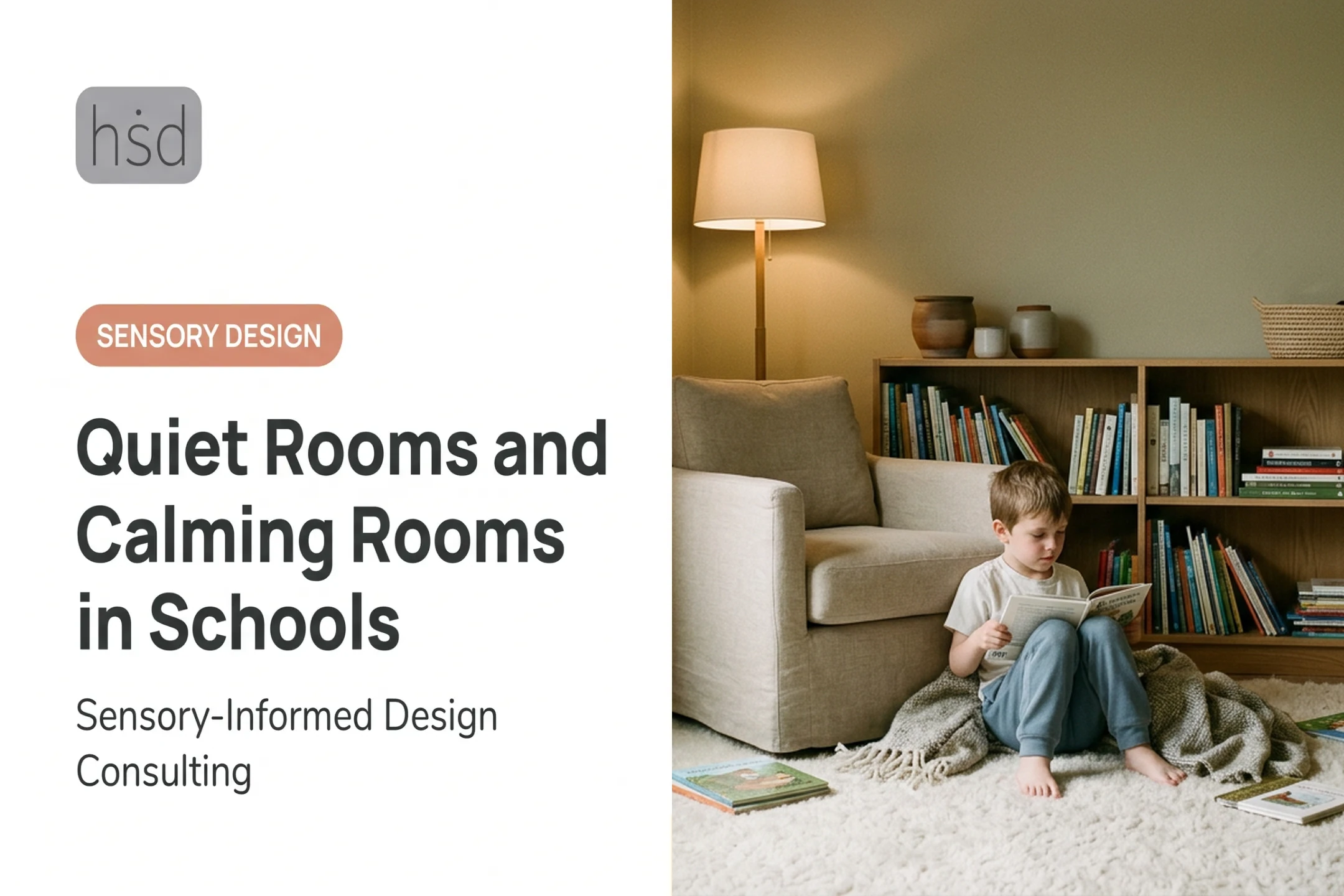
Offer a floor mat, cushion, stable chair, or soft divider so students can settle without feeling boxed in. A partial canopy adds privacy, but avoid fully enclosed spaces. They limit your ability to check in and can feel confining rather than calming for some students.
The most reliable way to get this right is to ask your students. Gather input on preferred textures, sounds, visual supports, and communication methods before finalizing anything. Build the corner around how they actually experience the space, not assumptions about what should feel calming.
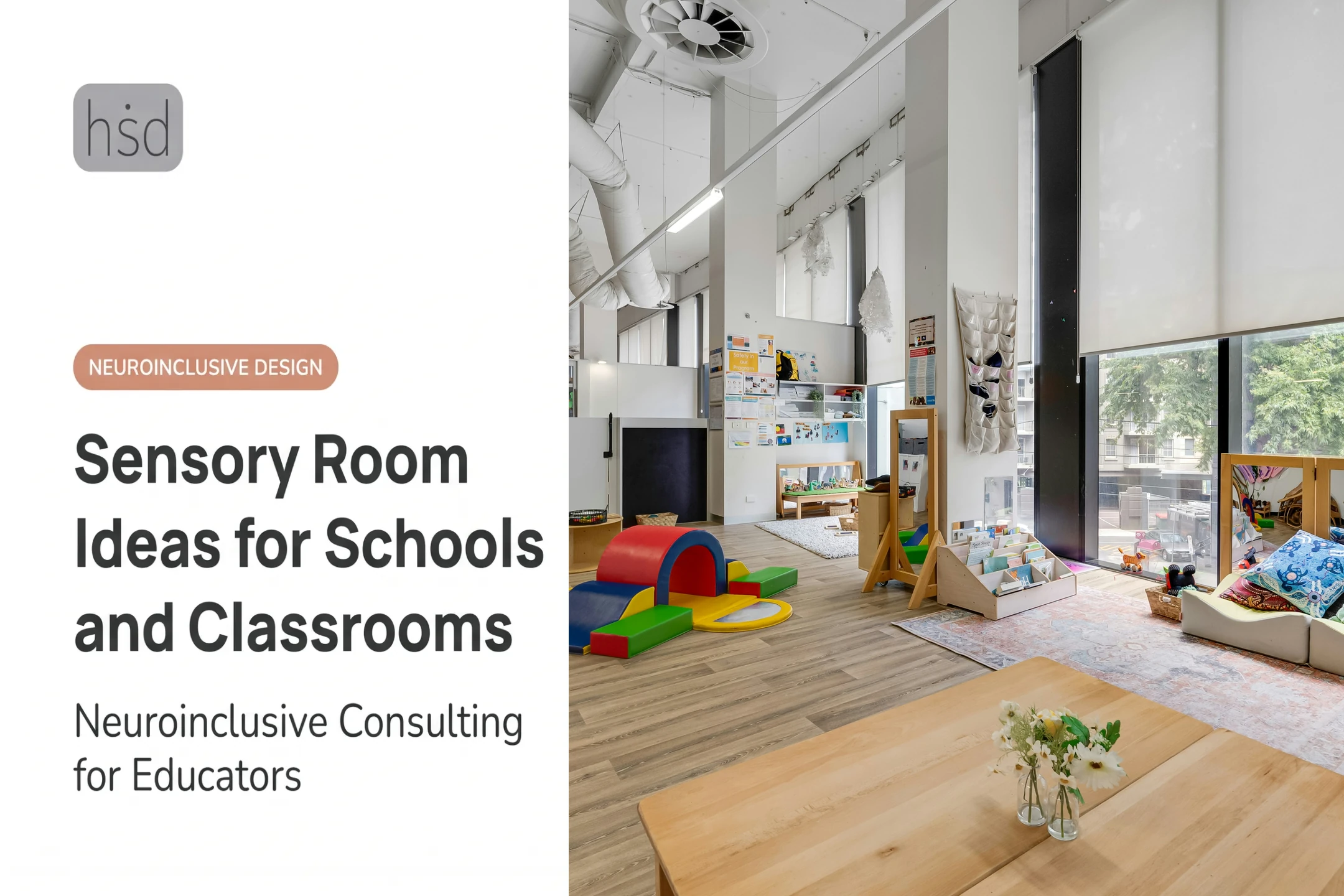
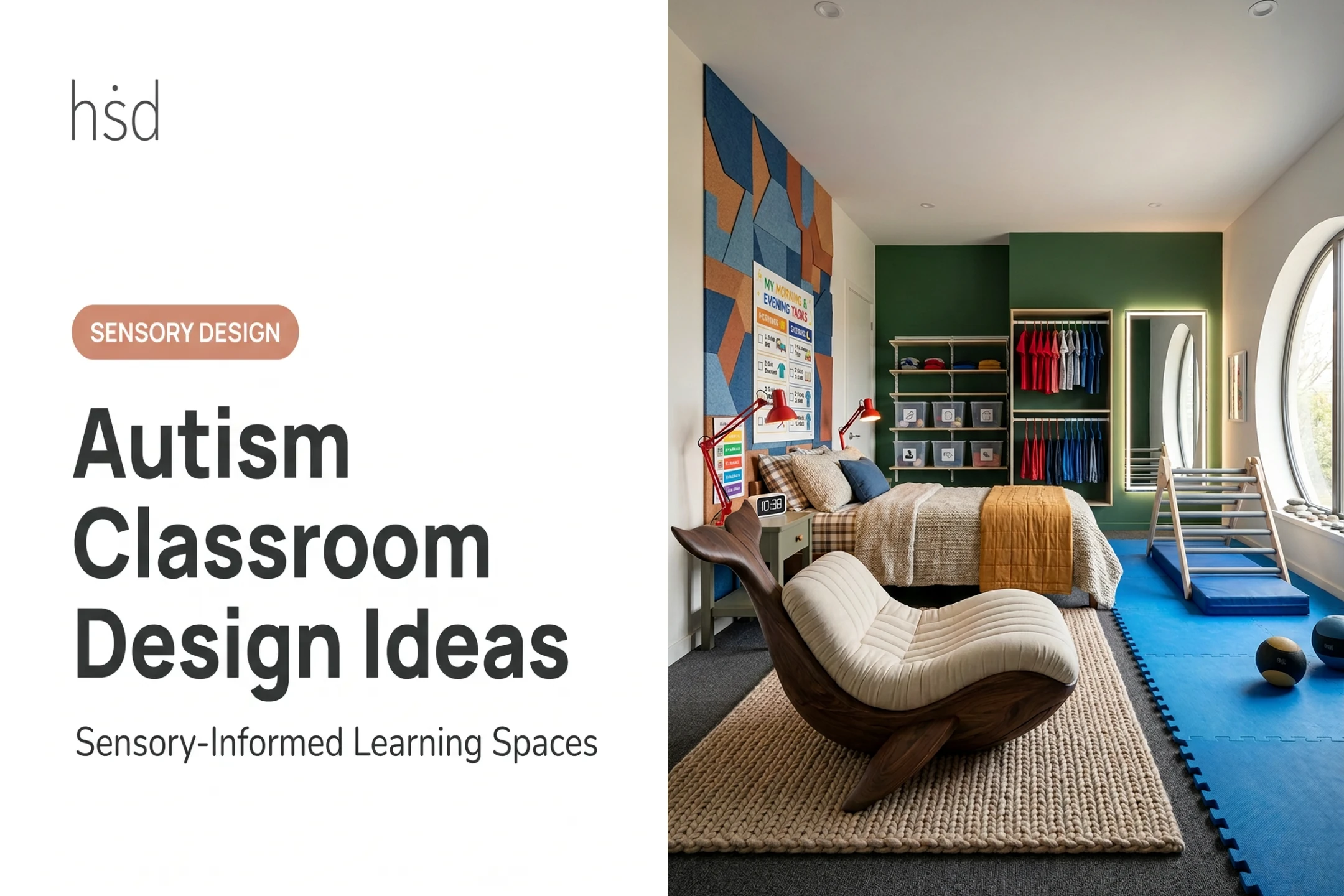
That same human-centered approach guides Highly Sensitive Design's sensory interior design work. Schools planning larger inclusive environments, such as sensory rooms across multiple classrooms, may also benefit from a sensory environment assessment or consultation.

Calm Corner Ideas: What to Include in the Space
Group tools by the type of support they provide. A single "calm corner shopping list" treats every student's needs as identical — and they are not.
Body-Based and Tactile Tools
Low-risk options include stress balls, therapy putty, textured fabric squares, or simple fidgets. Before adding any of these:
- Check for choking hazards with younger or object-mouthing students; small parts are a documented risk for children under 3
- Choose materials that wipe clean or wash easily
- Favor durable pieces; a fidget that breaks apart creates a new problem
Visual Communication Supports
Visual supports help students who struggle to find words for how they feel:
- Emotion charts or feeling scales
- First-then cards
- Breathing cards with simple step-by-step visuals
- Body check-in prompts ("Is your body fast, slow, or just right?")
- A coping-choice menu showing 3 to 4 options
- Simple entry and exit directions posted at the corner
Quiet Activities
Add options that don't require performance or output:
- Coloring pages
- A short book
- A simple puzzle
- A calming visual scene
Journaling can stay optional, but it should never become a mandatory reflection worksheet. A student shouldn't have to "prove" they used the corner correctly.
Sound and Movement Options
Noise-reducing headphones and quiet soundscapes can help when used carefully.
NIDCD notes that sound at or above 85 decibels can damage hearing, and very loud sounds can cause harm in under 15 minutes. Check volume limits before adding any audio device.
Other cautions to build in from the start:
- Skip scented items; fragrances can trigger asthma or allergies
- Use weighted products only with individualized guidance from an occupational therapist
- Offer movement prompts (stretching, a few jumping jacks) without requiring them — they help some students and overstimulate others
What Are the Rules and Routines for a Calm Corner?
Post a short, student-friendly agreement near the corner:
- You can ask for or choose a break
- Classmates don't question or tease anyone using the space
- Materials get used safely and returned to their spot
- The corner isn't for disturbing others or avoiding work indefinitely
Entry and Exit Routines
Build a low-friction entry routine: a visual card, a hand signal, or an agreed phrase like "I need a minute." Keep the exit routine just as clear: checking in with the teacher, picking a next step, or returning to the current task.
Timers as Structure, Not a Rule
Timers help some students self-monitor without becoming a rigid cutoff. Offer flexible time based on what the student needs that day, while still protecting access for anyone else who might need the space next.
Teach Every Tool While Calm
Every item needs modeling before a student uses it independently:
- Explain what the tool is for
- Show how to tell if it's helping
- Practice how to stop using it
- Teach how to ask for more support if it isn't working
Teach these steps during a calm moment, not mid-meltdown. A student who's practiced the routine ahead of time uses it far more effectively than one encountering it for the first time while distressed.

When a Student Needs More Support
If a student uses the corner frequently, refuses to leave, or seems more distressed after using it:
- Have an observational, supportive conversation rather than a corrective one
- Check for unmet sensory or instructional needs: is the work too hard, too loud, or too much?
- Loop in the school counselor, special educator, or occupational therapist
- Follow your school's existing safety and crisis procedures
Frequent use is information, not defiance. The corner should never default into a behavior-control system.
How to Make the Calm Corner Inclusive and Effective Over Time
Adapting for Different Students
Age and diagnosis are starting points, not rules. A younger student might reach for a stuffed animal and a picture schedule; an older student might prefer headphones and a journal.
Autistic students, students with ADHD, highly sensitive students, and multilingual learners often gravitate toward different tools. Two students with the same diagnosis can want completely different things.
Keep options open for students who communicate through spoken language, gestures, visual cards, or communication devices.
Accessibility Checks
Walk through the space periodically and ask:
- Can a student reach everything without help?
- Is the seating stable, not tipping or sliding?
- Are visual materials large and clear enough to read?
- Does the lighting or sound create a new sensitivity issue?
- Can a student use the corner without needing to explain themselves verbally?
Troubleshooting the Space
Ask students directly what feels unhelpful, then watch for patterns. Is the space too stimulating, or too exposed to classmates?
- Remove items that sit unused
- Rotate tools by adding only when you subtract something else
- Document patterns as behavior, not as labels on a student
Model regulation yourself. Taking a visible breath before responding to a frustrating moment, or narrating "I'm going to take thirty seconds before I answer that," normalizes the skill without requiring anyone to disclose their feelings publicly.

When modeling is not enough on its own, bring in support. For students with significant sensory, communication, safety, or regulation needs, loop in families, special educators, counselors, or occupational therapists early.
Highly Sensitive Design's work with schools, including programs that support neurodivergent and neurotypical students side by side, often starts with a sensory environment assessment. That means a structured look at lighting, sound, spatial layout, and accessibility across a classroom or building, not only a single corner in isolation.
Frequently Asked Questions
What should be in a calming corner in a classroom?
Comfortable seating, low-stimulation lighting and sound, visual coping prompts, and a small rotation of sensory tools and quiet activities. Add a simple way to request support, and choose items based on what your students actually use.
What are the rules for a calming corner?
Rules should protect safety, privacy, respectful tool use, and access for other students who need the space, while guiding a return to learning. A calming corner should never function as punishment or forced isolation. It works because students choose to use it.
What are some ideas for a sensory corner in a classroom?
Try tactile tools, breathing visuals, noise-reducing headphones, drawing supplies, movement prompts, and emotion-support charts. Add items gradually and keep what students actually reach for, since sensory preferences vary widely.