
A calming sensory bedroom isn't a Pinterest aesthetic or a shopping list of "ADHD-friendly" products. It's a personalized environment built around one person's sensory preferences, sleep patterns, daily routines, and specific friction points. What calms one person might overstimulate another entirely.
This guide walks through how to assess sensory needs, choose design elements that actually help, organize the room around ADHD-friendly systems, make changes safely, and budget realistically for the process.
Key Takeaways
- Design around the individual's actual sensory profile, not a generic "sensory room" checklist
- Fix the biggest sources of overload first, whether that's harsh light, noise, clutter, or storage friction
- Keep the bed as the room's primary sleep cue while carving out a separate zone for decompression
- Change one thing at a time and track whether it improves sleep, comfort, or transitions
- Small budgets work fine; professional design help matters most for complex needs or spaces
Start With the ADHD Sensory Profile, Not the Shopping List
ADHD sensory experiences aren't uniform. Research reviewed through 2010 found sensory-processing difficulties are more common in kids with ADHD than in their neurotypical peers. The patterns split into over-responsivity, under-responsivity, and sensory-seeking behavior—sometimes in the same person, depending on the day.
CHADD reports over-responsivity symptoms in 46% to 69% of children with ADHD across various studies. Adult ADHD research shows a similar pattern: higher sensory sensitivity across movement, visual, touch, and auditory processing compared with non-ADHD adults, though not necessarily for taste or smell.
That mix is why a generic "calming bedroom" checklist often misses the mark.
What This Means for Your Bedroom
Skip the shopping list. Start by naming the actual problem:
- Trouble winding down at night, even when tired
- Waking up from household noise or light
- Avoiding certain bedding or pajama fabrics
- Losing track of belongings in visual clutter
- Getting distracted by objects in the room
- Struggling with the transition from "awake" to "in bed"
A Simple Way to Track Triggers
For a week, jot down four things each time something disrupts sleep or comfort: the trigger, the reaction, what helped, and what happened afterward. Patterns usually point toward calming input (dim light, silence, soft textures), stimulating input (movement, pressure, background sound), or both.

Sensory preference checklist to work through:
- Visual — bright vs. dim, patterned vs. plain, clutter tolerance
- Auditory — silence vs. steady background sound vs. total noise-blocking
- Tactile — fabric weight, texture, tags, seams
- Olfactory — scent sensitivity or scent-seeking
- Temperature — heat retention vs. cooling preference
- Movement — need for rocking, pacing space, or stillness
- Pressure — deep pressure comfort vs. avoidance
- Organizational — open storage vs. closed, visual reminders vs. none
A person can seek input in one category and avoid it in another. Someone might want deep pressure from a weighted blanket and still find scented candles unbearable. Design for both patterns rather than assuming every ADHD bedroom should be dim and quiet.
Bedroom changes support comfort and routine, but they don't diagnose or treat ADHD. If sensory issues affect sleep, safety, or daily functioning, loop in a doctor or occupational therapist.
Highly Sensitive Design's Sensory Environment Assessment reviews lighting, ventilation, temperature, and layout to show where a room creates friction—and what to change first.
Calming Sensory Bedroom Ideas by Design Element
Once the sensory profile is clear, design choices get more targeted. Work through each element below with that profile in mind.
Color and Visual Design
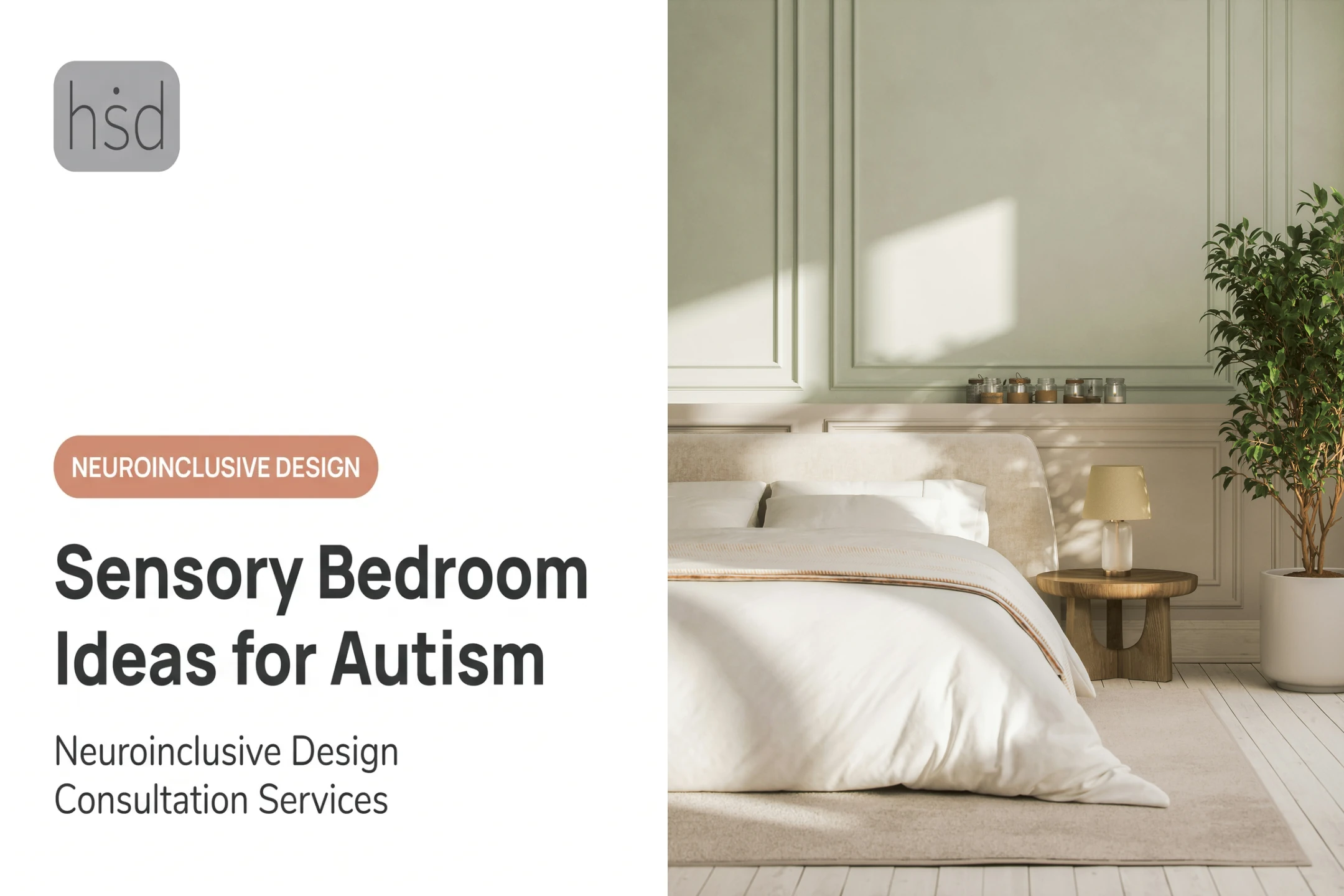
Muted, nature-inspired palettes are a reasonable starting point, but the evidence isn't ADHD-specific. A 2016 study on color and cognitive performance found that color effects depend heavily on the task and the individual, not a universal rule.
Limit busy patterns and visual competition. Keep a few personal colors or artwork pieces so the room still feels like theirs rather than a clinical space.
Lighting
Build light in layers:
- Natural daylight during waking hours
- Light-filtering or blackout window treatments
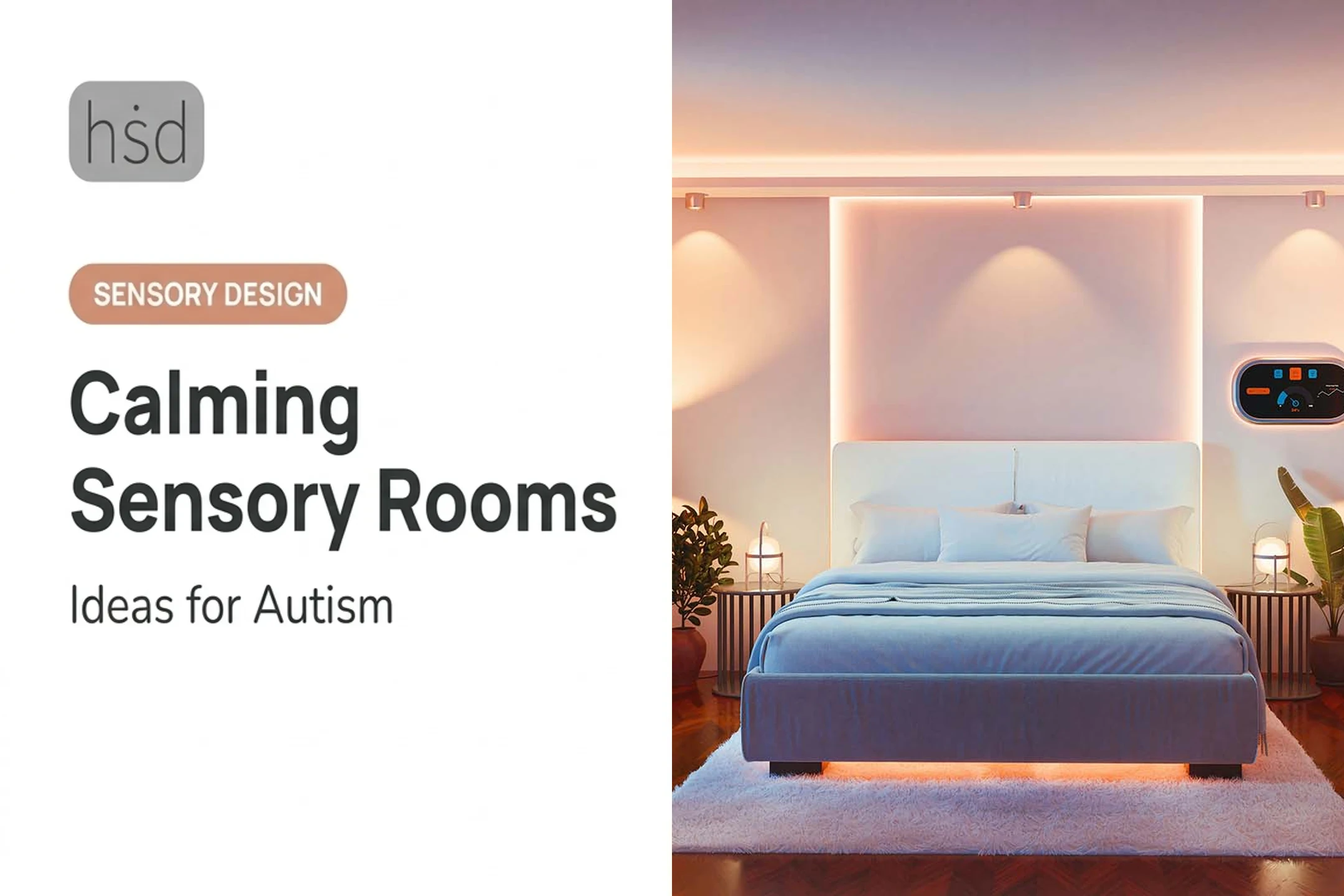
- Dimmable ambient light
- Low-glare bedside lighting
The Sleep Foundation notes that darkness supports melatonin release, and blackout curtains help when blinds alone don't block outside light. Don't assume colored or moving lights are calming for everyone; some people find them stimulating.
Sound
Cut unpredictable noise first:
- Door seals
- Rugs and soft furnishings
- Furniture placement that softens echo and traffic noise
Then add steady background sound—a fan or white noise—only if the person actually finds it helpful. Volume matters. Ear defenders or noise-cancelling headphones are worth trying as an alternative.
Tactile Comfort
"Soft" isn't universally calming. Test fabrics before committing:
- Breathable, natural-fiber bedding over synthetic blends that trap heat
- Tag-free sleepwear if seams or labels bother the skin
- Mattress and pillow firmness tested in person, not assumed
Pressure, Movement, and Proprioceptive Input
Some people find a firm body pillow or weighted blanket grounding; others dislike the pressure entirely. If you use a weighted blanket, follow manufacturer guidance and professional recommendations on safe weight limits. The person must be able to remove it independently and breathe freely.
Movement can regulate as much as stillness. Leave clear floor space to pace, or add a gentle rocker or resistance band only if those inputs help that person wind down—not rev up—before sleep.
Scent and Air Quality
Fragrance-free is the safer default for scent-sensitive individuals. Prioritize ventilation and low-emission materials where practical. Essential oils and diffusers carry real cautions around allergies, asthma, and small children, so treat aromatherapy as a personal preference, not a guaranteed calming tool.

Design the Layout for Regulation, Sleep, and ADHD Organization
Layout decisions do as much work as color and lighting combined.
Protect the Sleep Cue
The bed should read as "sleep," not "everything." Separate gaming, exercise equipment, and work materials from the sleep zone as much as the room allows.
Build a Retreat Zone
A chair, floor cushion, or reading nook gives a place to decompress without leaving the room. Keep it easy to exit, well-ventilated, and free of entanglement or fall hazards.
Cut Visual Clutter With Real Storage Systems
Give everyday items an obvious home:
- Open bins for things used daily
- Closed storage for visually distracting objects
- Labeled containers and hooks near where items get used
- A low-step laundry solution (a hamper by the door beats a closet across the room)
Support Executive Function
Place morning and bedtime items exactly where they're used. A visual timer, simple checklist, or routine card near the bed can ease transitions without adding clutter.
Don't Skip the Safety Review
- Smoke and carbon monoxide detectors in and near the bedroom, tested monthly
- Fire-safe textiles and compliant mattresses
- Clear walking paths and secured cords
- Anchored dressers and shelving to prevent tip-overs
CPSC's 2023 tip-over report estimated 1,800 child injuries from chests, bureaus, and dressers in a single year.
Fewer sensory tools, chosen deliberately, beat a room stuffed with lights, fidgets, and gadgets competing for attention.
Build the Room in Stages and Match the Budget to the Biggest Need
Start free. Then upgrade based on what's actually causing friction.
Stage 1: No cost
- Declutter surfaces and drawers
- Reposition furniture to separate sleep from activity zones
- Secure loose cords
- Add simple routine cues (a checklist, a basket by the door)
Stage 2: Targeted upgrades, based on current U.S. retail and service pricing:
| Component | Typical U.S. Cost Range |
|---|---|
| Interior paint (per room) | $350–$850 |
| Blinds or shades, installed | $208–$1,343 |
| Lighting fixture installation | $70–$300 |
| Bedding (sheets, mid-range) | $30–$220 |
| Storage furniture | $70–$380 |
| Acoustic panel (single) | ~$50 |
| Interior design consultation | $50–$200/hour, or $450–$1,500 for room design |

Actual totals depend on room size, existing furniture, and how much customization is involved. Rank changes by likely impact, and trial reversible options (like a $30 curtain swap) before committing to built-ins or permanent finishes.
If the sensory profile, routines, or the room itself feel too complex to untangle alone, this is where outside help earns its cost. Highly Sensitive Design's 30-Minute Neurodivergent Design Consult tackles a specific issue, like organization or lighting, for $250.
For a full room plan with product links, contractor referrals, and budget guidance, the Comprehensive Interior Design Consultation starts with a detailed intake on needs, goals, and daily routines. Neither service implies a full redesign is necessary. Plenty of rooms just need the right three changes.
Common Mistakes to Avoid and How to Evaluate What Works
The biggest mistake: copying a bedroom photo without checking whether it matches the actual person's sensory profile, sleep habits, age, mobility, or allergies.
Other patterns worth watching for:
- Piling on "calming" features until the room becomes stimulating — competing lights, strong scents, five different textures, visible clutter
- Choosing a tool because it looks therapeutic rather than because it solves a real problem
- Skipping a trial period before committing to expensive or permanent changes
Avoiding those traps is only half the work. After any meaningful change, give it two to three weeks and track outcomes directly:
- Is bedtime easier?
- Fewer night wakings?
- Faster morning transitions?
- Less time hunting for lost items?
Don't expect clinical results. Look for practical, everyday shifts.
Ask whether each item earns its place through genuine preference and function, not to make the room look "normal." The goal is autonomy and regulation, not suppressing movement or difference.
A small change that fixes a real friction point, like blackout curtains for someone woken by streetlight, often beats a full makeover.
Frequently Asked Questions
Are sensory bedrooms helpful for ADHD?
A personalized, low-overload bedroom can support better sleep, comfort, and regulation for some people with ADHD. Results vary by individual, and the room isn't a substitute for clinical support when needed.
How much does a sensory bedroom for ADHD cost?
Costs range from free rearranging and decluttering to several thousand dollars for professional design and custom builds. Main cost drivers include room size, product quality, and whether you hire a designer.
What should I put in a sensory bedroom for ADHD?
Start with the individual's sensory profile, then add adjustable lighting, comfortable bedding, sound control, and practical storage. Include a calming retreat area only if it solves a specific need.
What colors and lighting are best for an ADHD bedroom?
No single color works for everyone—effects vary by person and context. Start with low-glare, adjustable lighting and a simple color scheme. Bright or moving lights will not calm everyone.
How can I make an ADHD bedroom calming on a budget?
Declutter, reposition furniture, secure cords, and add light-filtering curtains before buying anything new. Use existing comfortable textiles and add upgrades gradually based on what actually improves comfort or sleep.