
The catch is that autism doesn't come with a single sensory profile. A CDC surveillance study of more than 25,000 autistic children found documented sensory features in 74% of cases, ranging from heightened sound sensitivity to reduced response to temperature to fascination with visual patterns. What soothes one person can distress another.
This guide walks through assessing sensory needs, choosing calming design elements, planning a room (or a much smaller space), managing safety and cost, and adjusting everything as needs change.
Key Takeaways
- Build the room around the individual's preferences and triggers, not a generic product list.
- Prioritize user control, predictability, low visual clutter, adjustable lighting, and clear organization.
- A corner, alcove, tent, or portable kit can work as well as a full room.
- Offer the space voluntarily as a regulation option, never as punishment or forced compliance.
What Is a Calming Sensory Room for Autism?
A calming sensory room is a deliberately designed space that reduces unwanted stimulation while offering specific, selected input across sight, sound, touch, movement, and pressure. The design goal is to remove what overwhelms and add only what genuinely helps—not to fill the room with equipment.
These spaces can support:
- Recovery from sensory overload
- Smoother transitions between activities
- Rest and downtime
- Focus before or after demanding tasks
- Nonverbal communication of needs
Results vary by person, and no design guarantees a specific outcome. That's worth saying plainly, because a lot of marketing around sensory rooms implies otherwise.
Calming, active, and hybrid spaces aren't the same thing. Research on multisensory environments distinguishes between setups where the person controls the equipment (active-change) and setups where equipment changes automatically (passive-change). In one study, giving participants control was linked to reduced activity levels and better attention, though anxiety and physiological arousal didn't differ significantly between the two conditions (2022 multisensory environments study).

That finding is a useful reminder: a calming room shouldn't automatically be stocked with bubble tubes, flashing lights, or interactive toys just because "sensory room" sounds like it should be stimulating. Calming and active setups serve different purposes.
At Highly Sensitive Design, this distinction shapes how a Sensory Environment Assessment works. Rather than starting with a product catalog, the assessment maps lighting, ventilation, temperature, acoustics, and accessibility in the existing space, then identifies what's actually causing friction before recommending changes.
Design the Room Around the Person, Not a Checklist
Skip the inspiration boards for a minute. The most effective sensory rooms start with observation, not shopping.
Watch and Document First
Before changing anything, track:
- What happens right before dysregulation starts
- Which inputs seem to help, and which make things worse
- How the person signals "more," "less," or "stop" (words, gestures, behavior)
- When and where the space is most likely to get used
A 2016 study that video-recorded autistic children at home found sensory and repetitive behaviors were closely tied to their everyday environment, reinforcing why home-context observation matters more than a generic checklist (PMC home-observation study).
Organize by Sensory Channel
Break decisions down by category instead of tackling the whole room at once:
- Visual: color, light, and visual clutter
- Auditory: background noise, echo, and sudden sounds
- Tactile: fabrics, textures, and surface temperature
- Vestibular/proprioceptive: movement, rocking, and deep pressure
- Environmental: temperature, smell, crowding, and transitions in and out
Build In Control, Then Zone the Space
Give the person as much control as possible:
- Dimmer switches and selectable sound
- Removable tools and adjustable seating
- A clear, unobstructed way to leave whenever they want
Then zone the room so a quiet retreat sits apart from any optional activity area. Keep unused items in closed storage, not on display.
Preferences shift with age, fatigue, stress, and time of day. Test changes gradually and adjust based on what you observe—not on what worked for someone else.
For movement equipment, deep pressure tools, or spaces involving mobility needs, bring in an occupational therapist. For layout, zoning, and sensory interior decisions across homes, schools, and clinics, a neurodivergent design consult from Highly Sensitive Design can help translate those observations into a plan.
Calming Sensory Room Ideas by Sensory Input
Once you understand the person's sensory profile, these categories give you a starting point. Treat every item here as optional, not required.
Visual Design
Favor soft, low-contrast colors, matte finishes, and limited patterns.
A 2016 comparison of autistic and neurotypical boys found the autistic group was less likely to prefer yellow and more likely to prefer green and brown. The authors were clear this doesn't establish a universal "autism color," so test colors with the actual person before committing.
Lighting
Use dimmable, indirect, warm fixtures with blackout options. Avoid glare, exposed cords, and rapidly changing light effects.
A 2022 study of autistic children's lighting preferences found low tolerance for harsh, fluorescent, bright, or flickering light. Some children also disliked dark spaces, so darkness isn't automatically the safer default.
Sound
Reduce noise transfer with soft furnishings, door seals, and acoustic treatment. Offer headphones or white noise only if the person actually finds them calming. Some people prefer near-silence; others prefer a steady background hum that masks unpredictable sounds.
Tactile and Comfort Elements
Introduce these one at a time rather than all at once:
- Washable cushions and soft fabrics
- Fidgets and textured panels
- Lap pads or weighted comfort items
- Sensory bins with selected materials
Grounding and Movement
Equipment that can support regulation includes:
- Bean bags
- Rocking chairs
- Crash pads
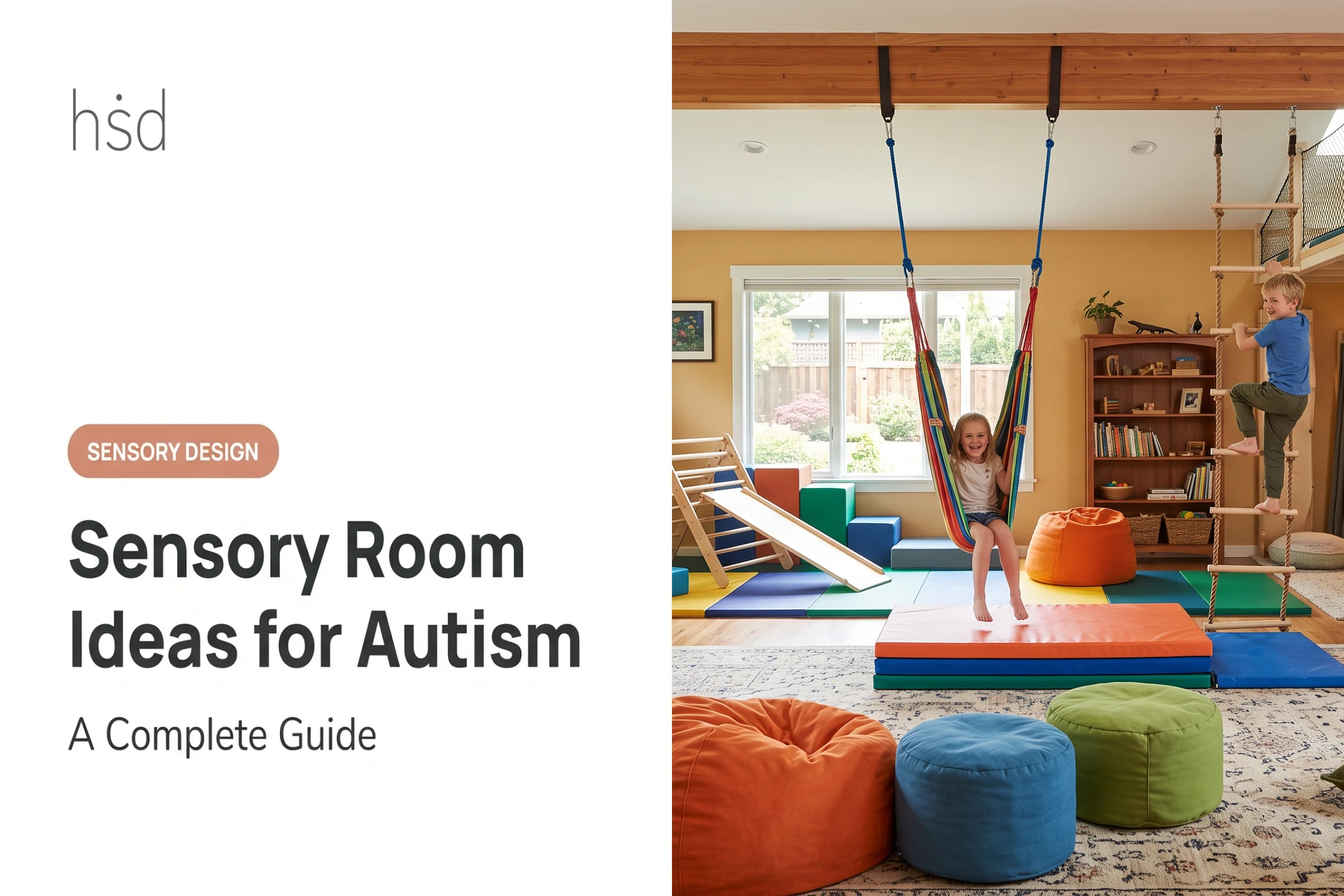
- Hammocks and swings
Movement and deep-pressure equipment need proper installation, weight ratings, and supervision. This is not a DIY-and-hope category.
Organization and Visual Supports
Keep the room predictable instead of cluttered with:
- Labeled storage
- A simple visual schedule
- Clear "available," "finished," and "break" signals
A clear path through the room matters as much as anything on the walls.
Plan the Room, Budget, and Future Changes
Sensory rooms don't have to start big. Think in tiers:
- Sensory corner — repurpose existing furniture, add a few selected tools, minimal cost
- Room refresh — new lighting, sound treatment, storage, and finishes
- Design-build project — construction, custom equipment, and professional installation
What Drives the Cost
| Component | Typical Range | Source |
|---|---|---|
| Recessed lighting | $300–$8,000 (avg. $1,800) | Angi, 2026 |
| Acoustic treatment | $1,033–$2,719 (avg. $1,863) | HomeAdvisor, 2025 |
| Flooring installation | $1,528–$4,859 (avg. $3,159) | HomeAdvisor, 2026 |
| Custom storage | $1,046–$3,210 | Angi, 2026 |

These are component estimates, not a single "sensory room price." Room size, existing wiring, structural changes, and accessibility modifications all move the total significantly.
Planning Checklist
Before spending a dollar, answer:
- Who will use the room, and how often?
- Where will it be located?
- Who supervises it during use?
- How will equipment be stored when not in use?
- How will you track whether it's helping or overwhelming?
If those answers feel unclear, professional planning help can prevent costly missteps. Highly Sensitive Design's Comprehensive Interior Design Consultation starts with this kind of survey—needs, goals, routines, and preferences—before any design direction is set.
For clients within a two-hour drive of New York City, the firm builds personalized sensory-focused recommendations for homes, schools, and clinics. Its 30-Minute Neurodivergent Design Consult is a lower-cost entry point for a single challenge like acoustics or lighting.
Revisit and Revise
After the room is in use, strip out anything that creates overload, adjust lighting or sound levels, and replace gear that's hard to reach. Plan a short check-in after the first few weeks—needs shift, and the room should too.
Safety, Accessibility, and Everyday Use
A calming space that's unsafe isn't calming for anyone.
Physical Safety Basics
- Anchor heavy furniture and wall-mounted features securely
- Protect outlets and keep cords out of reach
- Use non-slip, age-appropriate surfaces
- Keep exits clear at all times
- Follow manufacturer installation instructions for any equipment
Anchoring matters more than people assume. CPSC's Anchor It campaign has contributed to a nearly 50% decline in tip-over-related injuries and deaths. The agency recommends securing TVs, bookcases, and dressers, and keeping heavier items on lower shelves.

Accessibility
- Preserve turning and transfer space (ADA recommends a 60-inch turning diameter)
- Avoid wall-to-wall carpeting where it limits mobility
- Offer varied seating heights
- Choose durable, cleanable materials with good visual contrast
Responsible Use
- Offer the room proactively and voluntarily
- Supervise appropriately for the person and equipment involved
- Set a routine without forcing participation
- Never use the space as confinement or punishment
That single rule matters more than any design choice on this list.
Frequently Asked Questions
How much would a sensory room cost?
It depends on scope. A sensory corner using existing furniture might cost very little, while a full design-build with construction and specialized equipment costs much more. Request an itemized plan instead of a single average figure.
What are some ideas for a calming sensory room?
Strong starting points include low-glare lighting, controllable sound, comfortable seating, a few tactile tools, organized storage, muted colors, and a clear retreat area. Tailor each choice to the individual.
What color is calming for autism?
There's no single universally calming color. Research shows preferences vary by person and even by age group. Test muted, low-contrast options and let the individual's response guide your choice.
Do you need an entire room to create a sensory space?
No. A corner, closet, alcove, tent, or portable setup can work just as well when it has a predictable boundary, comfortable seating, selected tools, and a clear way to leave.
How can you make a sensory room safe?
Anchor furniture securely, keep exits clear, use safe and durable materials, and supervise appropriately. For swings, climbing equipment, or weighted products, get professional guidance before installing anything.