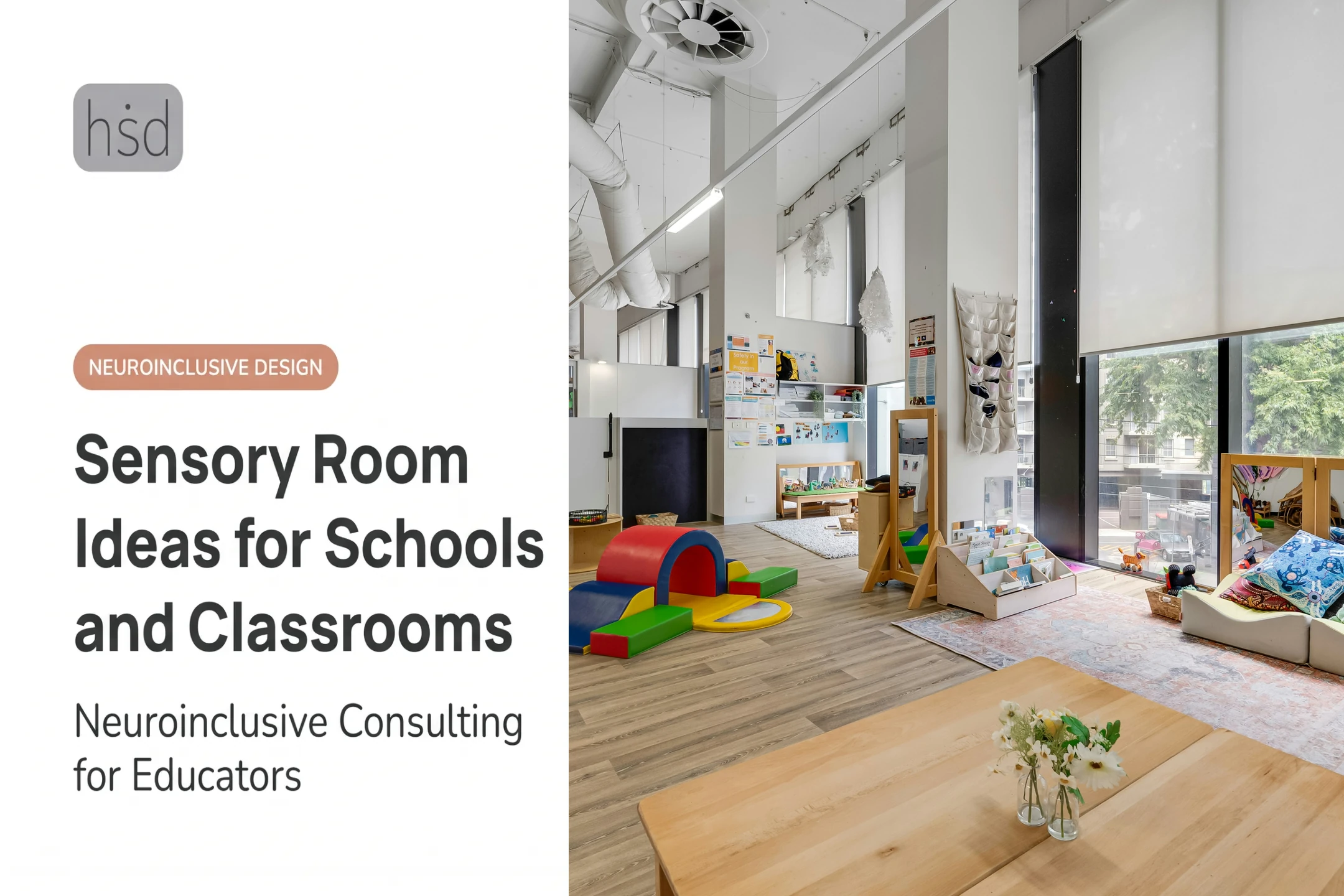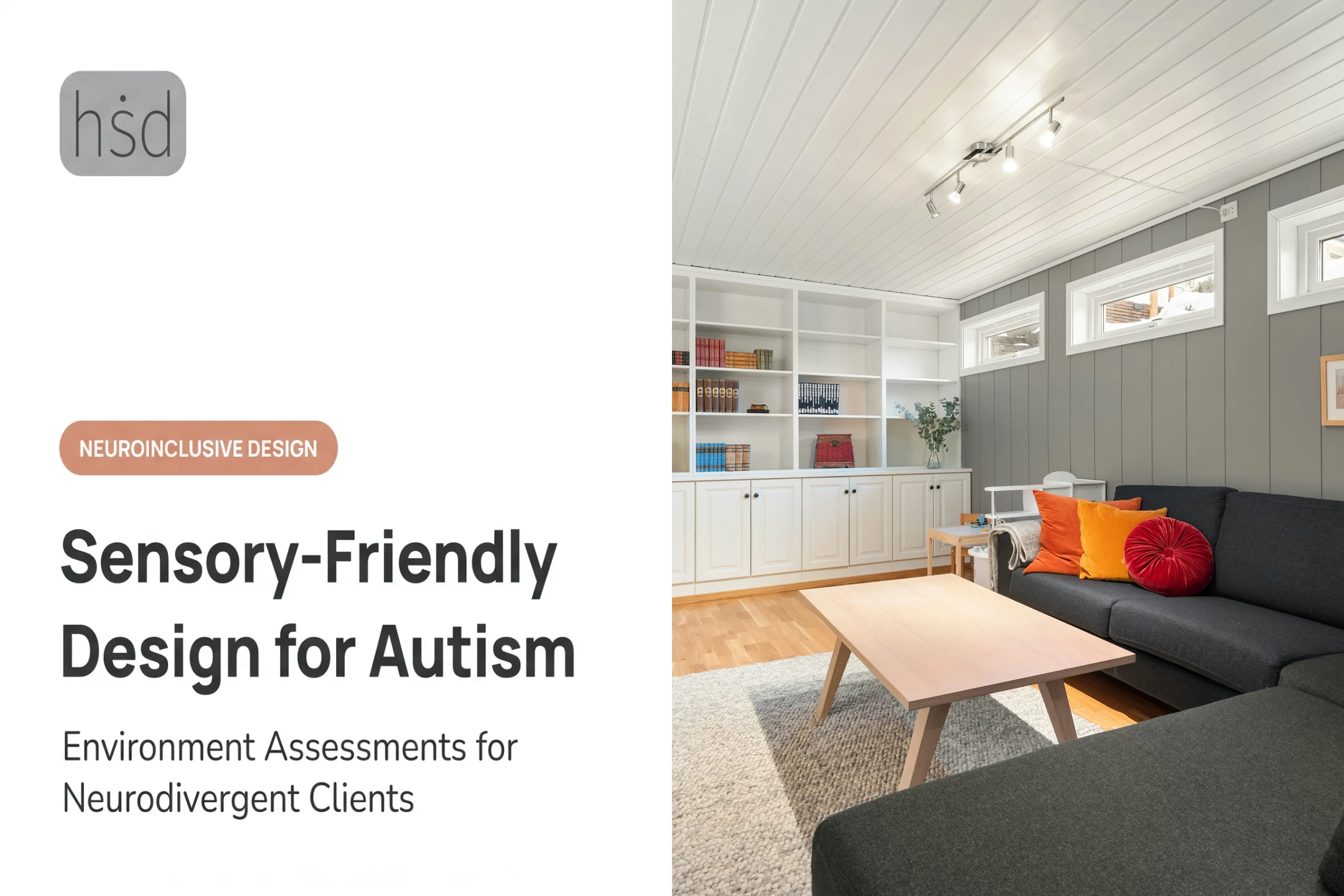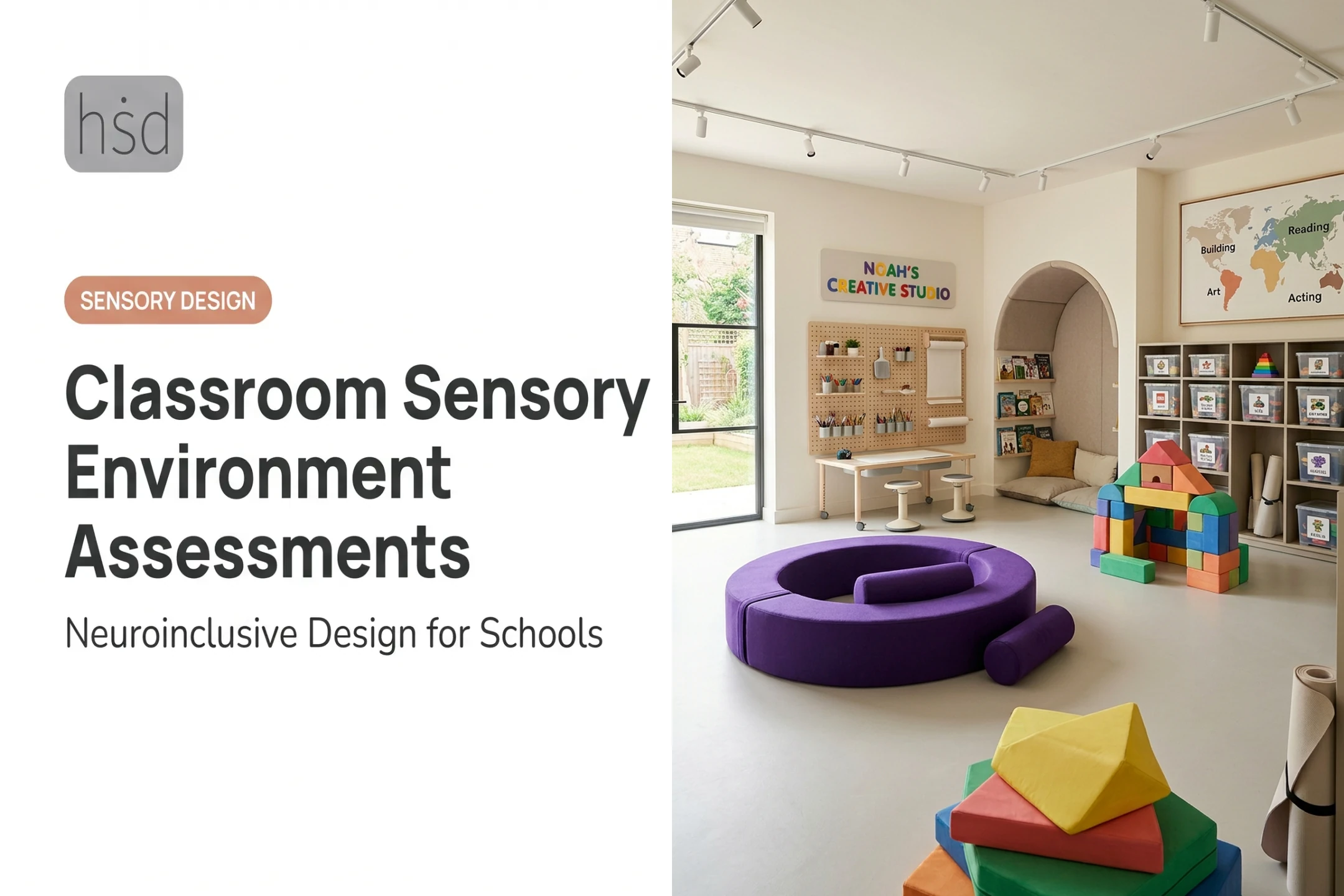

Many educators struggle to pinpoint why a student who seems capable during one activity shuts down during another. The room hasn't changed. Lighting, noise, crowding, and transition speed quietly shape whether a student can attend, communicate, and participate.
A Classroom Sensory Environment Assessment, or C-SEA, gives teams a structured way to look at this. Researchers who developed one published version of the tool collected data from 152 elementary classrooms using a 161-item rating scale, an early step toward understanding how much sensory conditions vary from room to room.
This guide covers what a C-SEA examines, how to run one step by step, a walkthrough example, and how to turn findings into changes worth keeping.
Key Takeaways
- C-SEA reviews classroom sensory conditions and student experiences—it does not diagnose autism, ADHD, or sensory processing differences.
- Reliable findings combine direct observation, student and staff input, and existing support plans.
- Effective recommendations target specific barriers such as noise, glare, clutter, or unpredictable transitions.
- Sensory supports should be tested, monitored, and adjusted, not treated as permanent fixes.
What Is C-SEA and Why Does It Matter?
A Classroom Sensory Environment Assessment looks at whether the physical and sensory qualities of a room support access, regulation, participation, and learning. It's an environmental review, not a clinical tool.
A C-SEA can flag environmental demands and possible supports, but it cannot diagnose autism, ADHD, sensory processing differences, or any other condition. That distinction shapes how teams use findings and who they involve next.
What a C-SEA Examines
A thorough assessment typically covers four broad categories:
- Auditory conditions — background noise, reverberation, sudden sounds, overlapping conversations, and how predictable alarms or announcements are
- Visual conditions — lighting quality, glare, movement in sightlines, wall displays, visual clutter, and screen demands
- Tactile, olfactory, thermal, movement, and spatial factors — furniture textures, strong smells, temperature, seating flexibility, crowding, and access to movement
- Routines and transitions — how quickly students shift activities, wait in line, unpack, or move through busy hallways
Why Environmental Fit Matters
Sound and light aren't just comfort issues; they connect directly to communication and attention. The American Speech-Language-Hearing Association notes that poor classroom acoustics create excessive noise and reverberation that can disrupt speech perception, listening comprehension, literacy, and attention. A room where a teacher's voice competes with HVAC hum and chair scraping taxes every student's working memory, not just the ones who ask for a quieter seat.
Lighting works the same way. The U.S. Department of Energy recommends 30 to 50 footcandles on the work surface for typical classroom tasks, and flags flicker as a source of discomfort that can be distracting or even harmful. Too little light strains focus. Too much glare off a whiteboard does the same, just differently.

When the environment doesn't fit, behavior often communicates what words can't. A student who covers their ears, leaves a seat, refuses a task, or shuts down may be signaling an unmet sensory or access need, not defiance. A C-SEA investigates behavior in context: what happened right before, what changed in the environment, and whether the student had a workable way to ask for a break. It never assumes a single cause.
Once a team maps out barriers, the smart move is starting small. Low-cost, reversible adjustments come first: moving a desk, dimming a light, or adding a visual cue. Furniture, lighting, acoustic treatment, or construction changes belong later, once observation supports the investment.
How C-SEA Works: A Step-by-Step Process
A useful C-SEA is not one clipboard visit. You observe across activities, times of day, group sizes, and noise levels, then draw conclusions. Typical sequence:
Define the assessment question. Name the concern—for example, whole-group participation or distress during transitions. Note students, activities, locations, and times in neutral, non-deficit language.
Gather perspectives and background. Collect student input in accessible formats, plus notes from families, teachers, paraprofessionals, and related-service providers. Use support plans for context—not instead of watching the room.
Observe the environment and student-environment interaction. Log sound, light, visual complexity, smells, temperature, movement, seating, and regulation options on one consistent form. Capture what happens right before and after a difficulty.
Map patterns and prioritize barriers. Separate one-off events from recurring conditions. Sort classroom-level fixes from school-wide needs. Rank by impact, frequency, safety, and student preference—not by changing everything at once.
Develop and implement supports. Match each finding to one concrete fix: seat away from a busy doorway, cut glare, add visual transition cues, or offer a predictable quiet-work option. Assign an owner and design the change so no student is singled out.
Review results and refine the plan. Track observable signs: more participation, smoother transitions, faster recovery, or student-reported comfort. After a set trial, keep what works and revise what does not. Bring in qualified professionals when safety or individualized therapeutic needs exceed environmental changes—C-SEA informs the space; it does not replace clinical care.

Done well, the process turns a live map of the room into ranked accommodations, clearer accessibility choices, and cleaner input for later renovation or new construction—without guessing from a single visit.
C-SEA Example Case Walkthrough
Picture a student who regularly covers their ears during group work, leaves the carpet during collaborative activities, and struggles to start independent tasks right after lunch. This walkthrough shows the reasoning process—it does not diagnose the student.
Gathering Information
The team observes arrival, whole-group instruction, small-group work, the lunch transition, and independent work time. They also ask the student and staff directly: what feels hard, and what already helps?
Spotting a Pattern
The same stressors show up across settings. Treat them as factors to test, not confirmed causes:
- Overlapping voices during group work
- Chairs scraping against tile
- Visual traffic near the student's desk
- An abrupt shift from a loud lunchroom into silent work
Testing a Response
The team stages a few changes together, rather than overhauling the whole room at once:
- Trial a quieter seating spot away from foot traffic
- Reduce unnecessary visual movement near the workspace
- Preview the post-lunch transition before it happens
- Offer a predictable break or quiet-work choice
- Teach the student a simple way to request support
Checking If It Worked
The team reviews the response using direct observation and the student's own feedback. They check whether the supports hold up across activities, not only in the first trial setting. If a strategy makes the student stand out, proves impractical for staff, or misses the real barrier, the team revises it.
What helps one student often shapes the room. Needs uncovered here can guide zoning, acoustics, lighting, furniture layout, and staff routines—while the student's own preferences stay central to the plan.

How Highly Sensitive Design Can Help
Turning C-SEA observations into a redesign takes a different skill set than running the assessment itself. Highly Sensitive Design is a multidisciplinary, human-centered design firm that works with highly sensitive and neurodivergent people in educational and other settings.
Its Sensory Environment Assessment service extends classroom review into design recommendations covering layout, sensory load, materials, furniture, lighting, regulation areas, accessibility, and everyday usability. Each plan fits the specific classroom, its students, and the school's goals rather than a generic template.
Founder and CEO Shell Li, AIA, is a licensed architect who became involved in neuroinclusive design after her son's autism diagnosis. Her team combines architecture, education, and neuroinclusive-design experience, with affiliated experts in psychology, therapy, toxicology, holistic medicine, and special education.
For schools, that expertise can translate into:
- Systematic evaluation and mapping of an existing classroom or program space
- Drawings and reports that function like an RFP for future construction or renovation
- Custom recommendations on sensory accommodations, accessibility, and layout for conditions such as ASD and ADHD
Highly Sensitive Design's Comprehensive Interior Design Consultation is currently available to clients within a two-hour drive of New York City. Schools outside that range should confirm current consultation scope and availability directly.
Conclusion
A C-SEA connects the physical conditions of a classroom to a student's ability to access, participate in, and recover from the school day. It works because it combines direct observation, lived experience from students and staff, and practical changes tested in the real room, not guesses made from a checklist alone.
Sensory-inclusive design isn't a one-time fix. Classrooms change. Students change. Schedules shift. What worked in September might need adjusting by January. Reviewing supports over time, and keeping student dignity and choice at the center of every change, is what makes the process worth repeating.
Frequently Asked Questions
Can you give me an example of a sensory assessment?
A team observes the room during arrival, group work, and independent time. They note noise, lighting, and transition speed, and ask the student what feels hard. A change might be moving a desk away from a noisy vent. This is not a diagnosis.
What are some effective sensory strategies for classrooms?
The strongest strategies are tested with the specific student and approved by them—not applied to everyone the same way. Common options include predictable routines, less visual and auditory clutter, flexible seating, movement breaks, and a quiet-work choice.
What does a classroom sensory assessment look at?
It examines sound, light, smells, temperature, movement, seating, transitions, and access to regulation options. It also looks at spatial factors like crowding and traffic patterns near a student's workspace.
Who can conduct a classroom sensory assessment?
Teachers, paraprofessionals, and other school team members can start with structured observation and collaboration. Involve occupational therapists or other qualified professionals for individualized or more complex needs.
How often should a classroom sensory environment be assessed?
No fixed interval. Reassess after changes to the room, schedule, students, or staffing, or whenever existing supports stop working.
Is a classroom sensory assessment the same as an autism assessment?
No. A C-SEA is an environmental review, not a clinical or educational evaluation of a student. Its findings should never be used to diagnose autism or any other condition.