
Introduction
A sensory trail is a planned sequence of movement, visual, tactile, auditory, and nature-based experiences that guides people through an indoor or outdoor space. Think of it as a route designed on purpose, not decoration added after the fact.
In 2026, schools, hospitals, parks, and museums are treating sensory trails as accessibility infrastructure, not optional amenities. Many families and educators still struggle to find indoor or outdoor spaces that support regulation without overwhelming the people who use them.
That gap is pushing designers toward choice-based routes: modular stations, quieter loops, and paths people can scale up or down as needed.
This article covers where sensory trail design is heading, what's driving the shift, how it's changing inclusive environments, and what to watch for next.
Key Takeaways
- Sensory trails in 2026 favor flexible, choice-based design over one fixed sensory experience for everyone.
- Predictable routes, low-stimulation alternatives, and clear pre-visit information matter more than flashy features.
- Nature, storytelling, and educational prompts add meaning, but every input should stay optional.
- Digital tools like QR codes and audio guides should supplement physical design, not replace it.
- Co-design with actual users produces better outcomes than guessing what people need.
Sensory Trail Trends in 2026
Five connected shifts define this year's sensory trail projects. Each moves designers away from one-size-fits-all stimulation and toward experiences people can shape for themselves.
Choice-Based and Regulation-Focused Design
The biggest change: trails no longer assume everyone should complete the same sequence. Instead, designers are building in options.
That means:
- Multiple intensity levels along the same route, so users can choose more or less input
- Pause points and retreat areas away from the main path
- Alternate routes that skip high-stimulation sections entirely
- "Opt-in" prompts before touch, sound, or scent stations
Visual schedules and predictable markers help people know what's coming before they arrive. The American Society of Landscape Architects recommends circular or figure-eight layouts with a single entrance, plus scattered seating and secluded spots where autistic visitors can step away from overstimulation.
This isn't guesswork. A 2024 peer-reviewed study on outdoor sensory environments found that participants consistently identified noise, bright lights, and visual overwhelm as barriers, and recommended flexible, human-centered design over a single fixed layout.
More sound, texture, or color isn't automatically better. Regulation and agency matter more than volume.

Nature-Connected and Seasonally Adaptable Trails
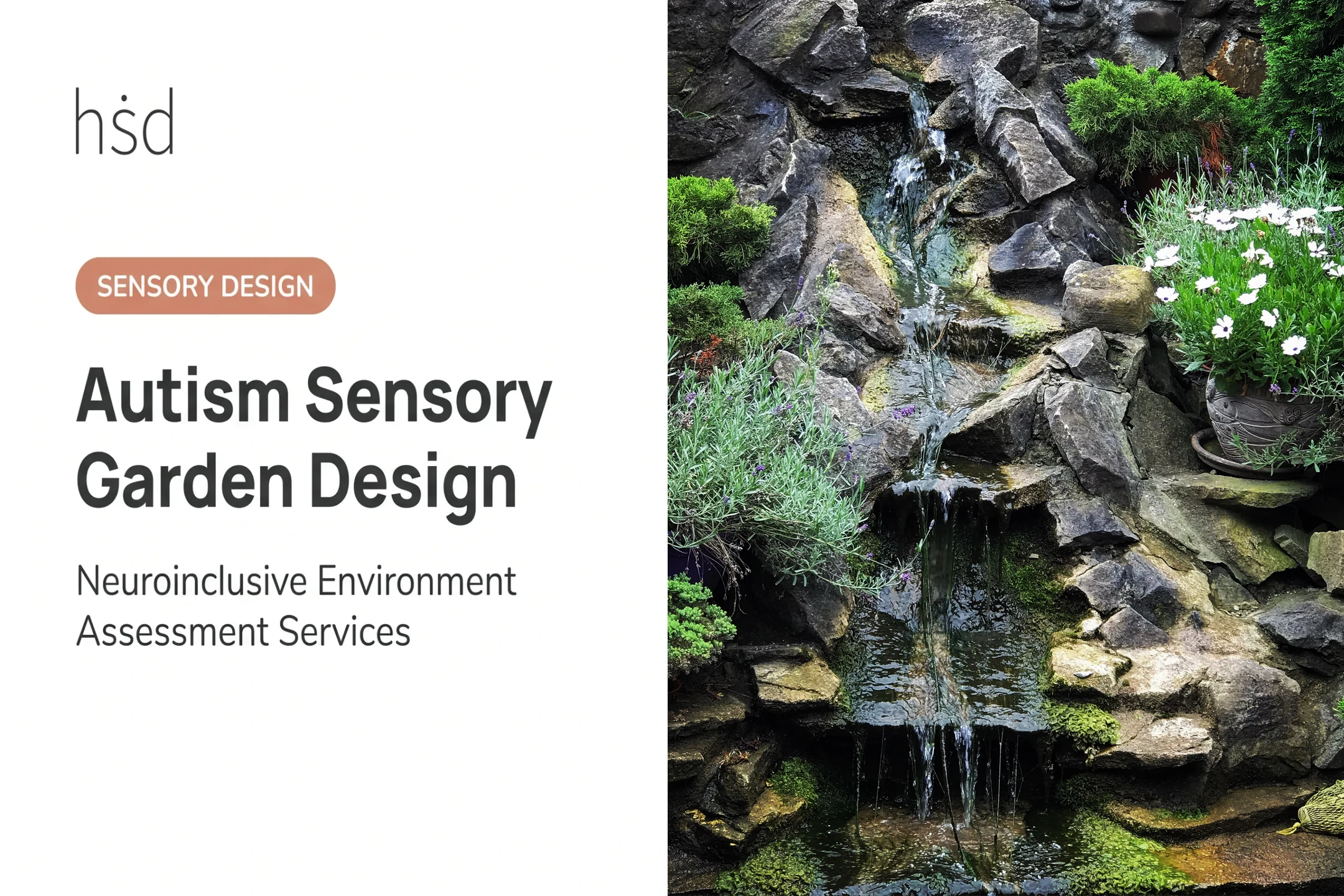
Manufactured equipment isn't required to create a rich sensory experience. Planting, shade, water, wind, and birdsong do plenty of work on their own.
Practical considerations include:
- Avoiding poisonous or allergenic plants near touch zones
- Choosing sturdy species that tolerate frequent handling
- Skipping pesticide-dependent plants where visitors will brush against foliage
- Planning for uneven ground, insects, and weather shifts across seasons
A school garden, a museum's grounds, or a healthcare courtyard can all become sensory destinations without turning the whole route into an obstacle course. The trick is layering seasonal interest, different bloom times, textures, and heights, so the trail changes throughout the year without requiring a redesign every few months.
Multisensory Learning and Storytelling
Sensory trails increasingly double as outdoor classrooms. Movement prompts pair with literacy stations, science observation points, or place-based storytelling.
The Museum of Royal Worcester built its sensory trail around tactile porcelain objects, tea-related soundscapes, and braille interpretation, developed over an eight-month collaboration with a local disability group and artists.
Pittsburgh's Frick Environmental Center takes a similar approach outdoors: its Sensory Nature Trail, opened in 2025, uses QR codes at each stop to add prompts for connection, creativity, and rest along a fully accessible woodland path.
The line to hold: educational engagement should invite exploration, not force sensory exposure. Plain language, symbols, and the option to explore independently or with a support person keep the experience genuinely optional.
Universal Access and Neuroinclusive Wayfinding
A trail that only works for non-disabled visitors isn't inclusive. Designers are now expected to plan for mobility, vision, hearing, and sensory differences from the start.
Core requirements:
- Firm, stable surfaces (a standard the USDA Forest Service builds into its trail accessibility guidelines)
- Appropriate path widths and rest points at reasonable intervals
- Contrast and tactile cues for level changes
- Signage that communicates length, surface conditions, and likely sensory conditions before someone starts
A 2025 report on trail and greenway design from UBC Sustainability Scholars put it plainly: neuro-inclusive trails should increase predictability and reduce stimulation, with accessibility mapping that covers sensory and cognitive access, not just mobility.
Teams should consult autistic people, people with ADHD, highly sensitive users, and the caregivers and therapists who support them, rather than assuming a single layout serves everyone.
Optional Digital Layers and Responsive Experiences
Technology is showing up more often, but as a supplement, not a substitute.
Examples already in use:
- Pittsburgh's Frick trail uses QR codes at every stop for sensory prompts and information
- The San Diego Zoo Wildlife Alliance's 2025 accessibility guide includes an app with social stories and a marked "best path" on its map
- Denver Zoo's 2026 sensory guide gives advance notice on crowd levels, lighting, music, and quiet-area locations for its Glowing Wild event
None of these tools work well if they're mandatory. Good digital layers stay optional, privacy-conscious, and available in accessible formats, so a smartphone isn't a gatekeeper for participation.
What's Driving These Sensory Trail Trends
Several forces are pushing this shift at once.
- Neurodiversity awareness is rising. The CDC estimates 7 million U.S. children, or 11.7%, have an ADHD diagnosis based on 2024 survey data—a population large enough to shape how public spaces get designed.
- Expectations are shifting. Parents, educators, patients, and visitors increasingly want meaningful participation and quiet options, not accessibility as a single checkbox feature.
- The design field is advancing. Inclusive landscape architecture, environmental psychology, and occupational therapy research are giving designers more tools than a ramp and a sign.
- Budgets favor flexibility. Modular, reusable, natural features can be refreshed over time instead of relying on one expensive permanent installation.
- Competitive pressure is real. Schools, healthcare providers, parks, museums, and airports increasingly see sensory access as a visible planning priority, not an afterthought.
At Highly Sensitive Design, this mirrors what shows up in a Sensory Environment Assessment: barriers and opportunities rarely come from one factor. Lighting, acoustics, surface conditions, and layout all interact, which is exactly why trail design has moved past a single sensory checklist.

How These Trends Are Impacting Inclusive Environments
These shifts reshape more than the initial design brief. They change how organizations staff, maintain, and evaluate inclusive spaces day to day.
Operational Impact
Sensory trails require ongoing attention, not a one-time install. Organizations typically need:
- Routines for inspections, repairs, and seasonal plant updates
- Clear ownership of who maintains each feature
- A process for reporting hazards or worn surfaces
- A plan for communicating current sensory conditions (like construction noise or a temporary detour)
A simple operating plan that covers these four items keeps a well-designed trail from degrading within a year or two.
User and Community Impact
When that plan holds, the user upside is concrete: greater participation, supported movement breaks, outdoor learning, and less uncertainty for caregivers. Sensory trails support regulation. They do not prevent meltdowns or treat medical conditions.
Feedback from actual users tends to surface issues designers miss entirely, such as:
- A "quiet" area that's actually within earshot of a busy path
- Signage that assumes reading ability the audience doesn't have
- A textured surface that's genuinely unpleasant for some users, not just novel
Strategic and Design Impact
Sensory trail decisions ripple outward into site planning, school accommodations, and visitor services. A useful evaluation framework tracks:
- Participation rates – how many people use the trail versus pass by it
- Alternate-route use – whether optional paths get chosen, and how often
- Reported comfort – direct feedback, not assumptions
- Accessibility issues and maintenance incidents – logged over time, not anecdotal
- Qualitative feedback from users, families, and staff
When a trail must balance sensory, cognitive, behavioral, and functional needs across a mixed user group, outside consultation can turn research into a workable plan. Highly Sensitive Design's Neurodivergent Design Consultation packages support that cross-disciplinary work, starting at a 30-minute consult for $250.

Future Signals for Sensory Trails in 2026 and Beyond
Sensory trail design won't stand still. A few signals worth watching:
- Co-design from day one: neurodivergent people, disabled users, families, and therapists join site assessment through post-occupancy review, as the Museum of Royal Worcester modeled
- Pre-visit tools such as downloadable maps, social stories, and sensory forecasts, already published by Denver Zoo and San Diego Zoo Wildlife Alliance
- Modular trail systems and climate-resilient materials that reconfigure as community needs or seasons change, instead of fixed installs that age out
- Evaluation that tracks comfort, agency, and repeat visits, not only whether someone finished the path
Conclusion
Sensory trails in 2026 work best when they stay flexible, stay tied to nature, and stay inclusive across schools, parks, healthcare settings, and public spaces. The ones that last follow a clear pattern: designed with users, built with real low-stimulation alternatives, and kept useful through ongoing maintenance and evaluation.
If your organization is planning a sensory trail, start with your community's actual needs—not a features list. For complex sites or mixed user groups, sensory-aware assessment and consulting from Highly Sensitive Design can prevent costly redesigns later.
Frequently Asked Questions
What is a sensory trail?
A sensory trail is a planned sequence of movement, visual, tactile, auditory, and nature-based experiences along a defined route. It can be installed indoors or outdoors to support exploration, learning, regulation, or physical activity.
What are some ideas for sensory paths outdoors?
Popular features include natural textures, scent-safe planting, sound-observation points, balance or movement prompts, and shaded rest stops. Always pair these with accessible alternate routes for users who want lower stimulation.
How do you make a sensory trail inclusive?
Co-design with actual users, provide predictable information before people start, and make every activity optional. Add accessible surfaces, low-stimulation areas, and clear wayfinding for varied mobility and sensory needs.
Are sensory trails only for autistic children?
No. Sensory trails serve people of all ages and abilities, including autistic and ADHD individuals, highly sensitive people, older adults, people with sensory impairments, and general visitors and families.
What should be considered when choosing sensory trail materials?
Look at durability, slip resistance, toxicity, and allergy risk alongside maintenance needs and weather resistance. Every tactile material should also be easy for users to avoid if they don't want to touch it.
Do sensory trails need technology?
No. Technology is optional. Digital maps, audio description, and social stories can improve preparation, but clear physical design and non-digital information should always remain available.