
Introduction
A sensory room doesn't require a spare bedroom, a five-figure equipment budget, or a padded ceiling. What it needs is a controllable environment that matches how a specific person's nervous system responds to the world.
Most homes create sensory friction without meaning to. Visual clutter piles up on counters. TVs and dishwashers create unpredictable background noise. Overhead lighting stays harsh at all hours. Space is tight, and there's often nowhere quiet to decompress after a hard day.
That friction hits a lot of households. According to 2022 CDC surveillance, 1 in 31 U.S. 8-year-olds has autism spectrum disorder, and sensory processing differences also show up with ADHD, high sensitivity, and other neurotypes.
This guide covers how to plan a sensory space around real preferences, room ideas for different home setups, small-space solutions, and the safety details that matter most.
Key Takeaways
- Build the room around a person's sensory profile and goals, not a generic equipment list.
- Start small: a corner, a bedroom zone, a closet, or a portable kit works before a full room does.
- Limit sensory input to what's manageable, and keep lighting, sound, and texture adjustable.
- Anchor furniture, clear pathways, and supervise movement or small-object activities.
- Reassess the space regularly since preferences shift as people grow and change.
What Is a Sensory Room?
A sensory room is any home space, big or small, where you can adjust light, sound, touch, movement, pressure, or visual input. The goal is comfort, focus, play, or self-regulation, depending on what the person needs at that moment.
These spaces can support autistic people, people with ADHD, highly sensitive individuals, and anyone with sensory processing differences.
Preferences still vary widely. A flickering fiber-optic light might calm one child and overwhelm another. There's no universal formula.
Three Types of Sensory Spaces
Most home sensory setups fall into one of three categories:
- Calming spaces — designed to reduce input and support regulation after overstimulation
- Active sensory play spaces — built for movement, heavy work, and proprioceptive input
- Hybrid rooms — combine low-stimulation zones with areas for purposeful movement, useful when one room needs to serve multiple functions
Choosing the type that fits starts with the person who will use the space.
Plan the Room Around Individual Sensory Needs
Skip the equipment list. Start with observation instead.
Watch Before You Buy
Spend a few days documenting patterns. Note what tends to overwhelm or calm the person:
- Reactions to noise, brightness, or crowds
- Responses to touch, movement, or specific smells
- Behavior during transitions or when fatigued
These observations should define the room's primary purpose. The American Occupational Therapy Association is clear on this point: sensory-based interventions need documented assessment of the person's actual difficulties first.
Sensory processing patterns are individualized, not generic.
Organize by Sensory Channel
Once you know the goal, break the design down by channel:
- Visual: adjustable lamps, soft projections, and one predictable focal point—skip colorful moving lights if they overstimulate rather than calm
- Auditory: rugs, curtains, acoustic panels, headphones, or a controllable sound source, with silence always available
- Tactile and oral: a small, supervised rotation of textures, fidgets, sensory bins, or professionally recommended chew tools matched to tolerance
- Movement and proprioception: floor space, cushions, rocking, or resistance activities suited to ability and what the room can support
Introduce Elements Slowly
Add one or two things at a time. Watch whether they support regulation or add distress, then remove anything that becomes distracting or unwanted. This isn't a one-time setup; it's ongoing tuning.
There's evidence behind this approach. A study of 41 autistic children ages 4 to 12 found that giving kids control over sensory changes in the room reduced repetitive behaviors and increased attention, compared with environments where input was fixed.
Accessible switches, dimmers, and removable tools are part of the intervention itself, not optional extras.
If you want help turning notes into a layout, a sensory environment assessment from Highly Sensitive Design looks at lighting, accessibility, and daily routines together so the room plan matches the person who will use it.

Sensory Room Ideas for Different Home Setups
The right setup depends on available space and the person's primary needs. Here's how that plays out in practice.
Calming Sensory Room or Quiet Zone
A comfortable seat or floor cushion is the anchor. Add:
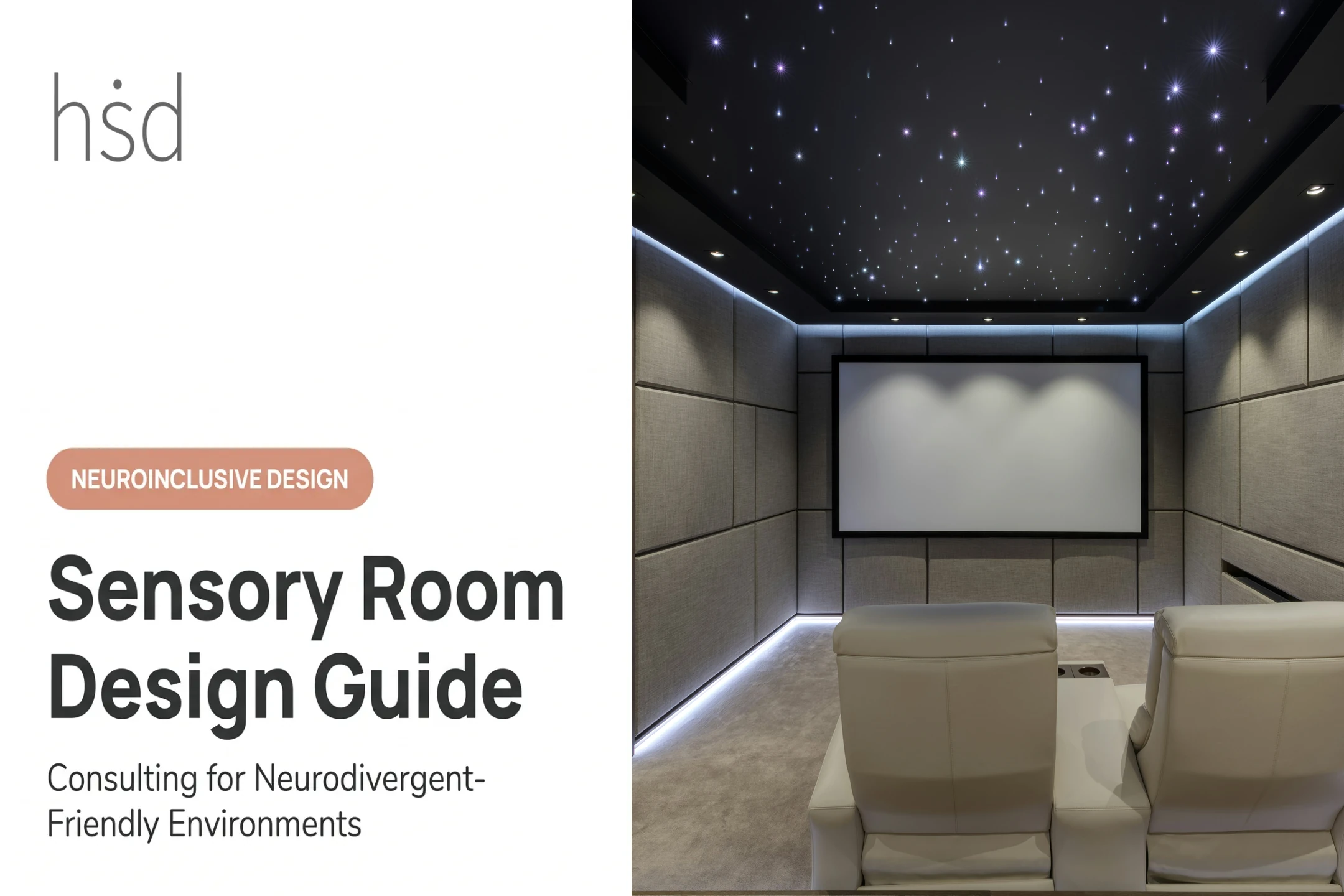
- Soft, adjustable lighting (avoid overhead fluorescents)
- Blackout or light-filtering window coverings
- Simple, uncluttered colors
- Noise-reduction options like a rug or closing door
- A small selection of preferred comfort items
Only add a visual focal point, such as a slow projector or liquid-motion lamp, if predictable movement is genuinely calming for that specific person. It isn't for everyone.
Active Sensory Play Room
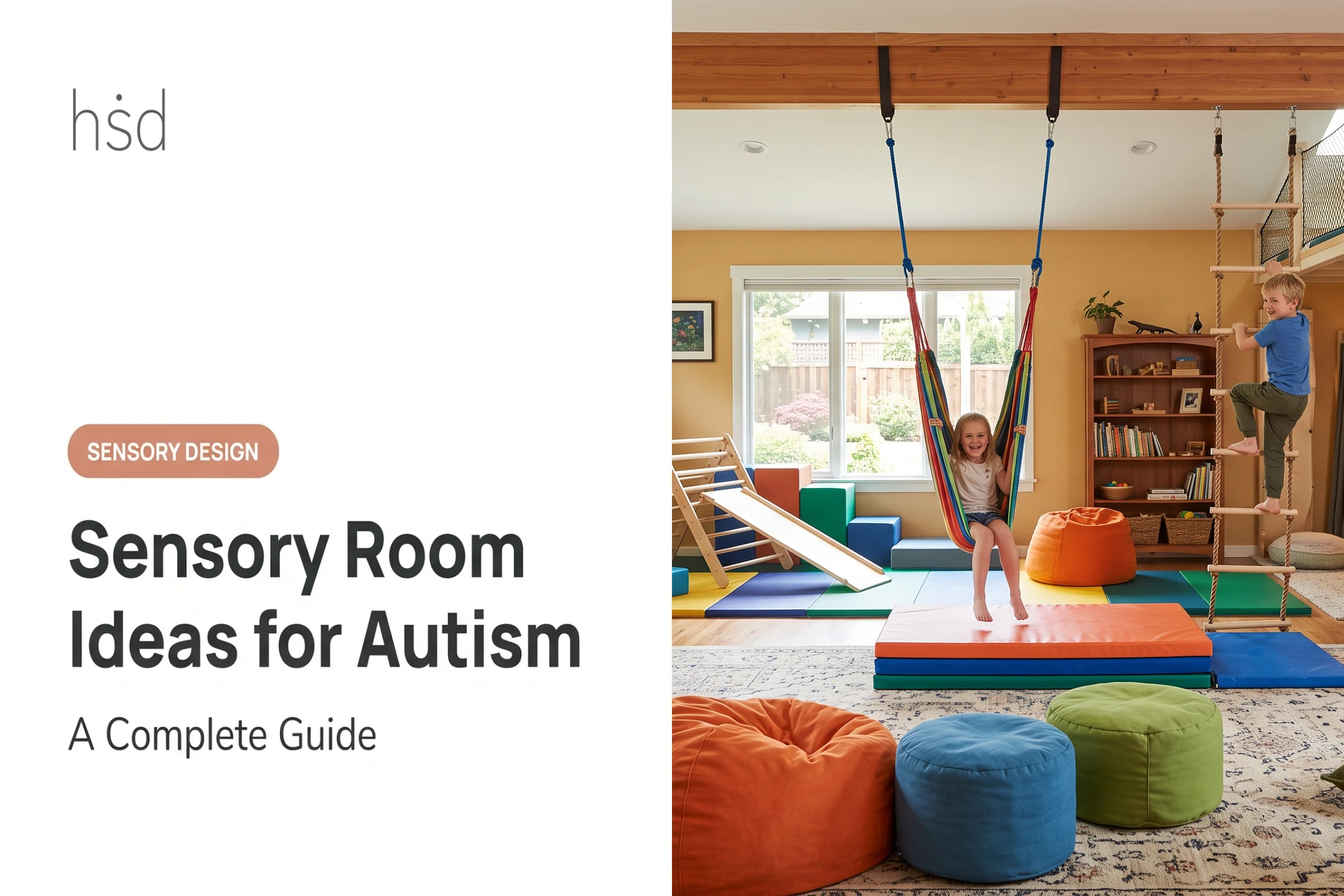
This one needs clear floor space, nothing else. Think crawling, jumping, dancing, or a simple obstacle course, scaled to age and mobility. Crash mats or other impact-absorbing surfaces help where appropriate.
Any climbing or swinging equipment should be professionally installed and structurally assessed. Attaching it to drywall alone is not a safe long-term fix.
Tactile and Creative Area
Rotate materials based on interests and tolerance:
- Sensory bins
- Textured activity boards
- Washable art supplies
Store everything in labeled, accessible containers so the person can choose or put items away independently. Introduce anything messy or strongly scented gradually, not all at once.
Sensory Bedroom
Keep the visual field simple and reduce glare. Choose bedding based on texture preference, not just appearance. Layered lighting lets the room shift between daytime activity and nighttime calm.
A defined regulation corner helps too: a comfortable seat, books, headphones, and maybe a weighted item, used only when appropriate and supervised. The goal is a bedroom that still feels like a bedroom, not an equipment room.
Small Home Adaptations
No spare room? A living-room corner can work with a folding mat, compact seating, and a small storage unit for a portable sensory kit.
Closets, alcoves, and under-bed containers also work, as long as you keep ventilation, a clear exit, and adequate lighting in place. Never create an entrapment hazard.
If a full redesign feels out of reach, a targeted consultation, like the sensory environment assessments from Highly Sensitive Design, can help align layout, materials, lighting, and family routines around what the person actually needs, without a construction project.

Safety, Accessibility, and Everyday Use
In a home sensory room, safety and access come before aesthetics. Build the space so it stays usable day after day.
Physical Safety Basics
- Anchor furniture and TVs to the wall using anti-tip brackets
- Secure loose cords and cover outlets where relevant
- Inspect small parts regularly, especially with young children
- Use shatter-resistant materials wherever possible
- Keep pathways clear of trip hazards
- Follow manufacturer guidance for any climbing, swinging, or weighted equipment
Tip-overs are easy to underestimate. CPSC data found that between 2000 and 2010, a child died on average every two weeks from a TV or furniture tip-over, with more than 22,000 children age 8 and younger treated for related injuries from 2008 to 2010 alone.
Weighted items need their own rules. Pediatric guidance is clear:
- Never use a weighted blanket with a child under age 2
- Keep weight at or below about 10% of body weight
- Supervise use and confirm the person can remove it independently
- Never cover the head or neck
Accessibility Considerations
If mobility devices, low vision, or mixed-ability use are part of daily life, plan for:
- Clearance for transfers and turning
- Stable, non-slip flooring
- Visual contrast for low-vision needs
- Comfortable reach ranges for switches and storage
- Temperature, ventilation, and a clear, unobstructed exit
Using the Room Well
Treat the room as a regulation tool, not a behavior lever:
- Don't turn on every feature at once
- Supervise movement-based or small-object activities
- Never use the space as punishment or as a reward tied to behavior
- Revisit the setup as needs change
What works at age 4 often fails at age 9, and adult preferences shift with routines and stress too.

Frequently Asked Questions
What is a sensory room?
A sensory room is an adjustable home space where sensory input like light, sound, texture, or movement can be modified to support comfort or focus. Its purpose and contents should always be built around the specific person using it.
What are some ideas for a sensory room?
Common elements include comfortable seating, dimmable lighting, sound control, a small tactile toolkit, movement options, and accessible storage. Choose only what fits the person's actual sensory profile rather than adding everything at once.
What can I put in a small sensory room?
A compact seat or mat, a small storage box, dimmable lighting, headphones, and a few preferred fidgets go a long way. Keep the floor area clear and uncluttered above all else.
What are some ideas for a sensory bedroom?
Focus on low visual clutter, comfortable bedding matched to texture preference, adjustable lighting, and quiet. A dedicated regulation corner with familiar items gives a clear place to reset at night or after overstimulation.
What are some ideas for a sensory play room?
Prioritize open movement space, crash-safe surfaces, tactile play materials, and cause-and-effect activities. Keep storage organized and provide age-appropriate supervision throughout.
What can an OT do for sensory issues?
An occupational therapist can assess functional and sensory needs directly and recommend individualized strategies or equipment based on that assessment. This article offers general ideas, but it isn't a substitute for professional evaluation.