
Teachers and school teams face real complexity here. Students in the same room may use different communication systems, have different sensory profiles, use mobility equipment, work at different academic levels, and carry different medical considerations. Every one of those factors shows up in the physical space, whether anyone planned for it or not.
This guide breaks down the terminology, explains how placement decisions actually work, and walks through sensory-aware design principles and functional classroom zones. It also shows how a well-designed environment supports independence without replacing individualized instruction, IEP goals, or clinical guidance.
Key Takeaways
- Design around each student's IEP goals and support needs, not a diagnostic label or generic layout
- Sensory regulation, AAC access, mobility, visual predictability, and dignity matter as much as academic instruction
- Defined zones support transitions, small groups, independent work, life skills, and breaks
- Build changes with educators, families, therapists, and students, then review with observable data
What "Mod/Severe" Means in Special Education
Here's something that surprises a lot of new staff: IDEA does not define a federal "moderate/severe" category. The federal law lists disability categories such as intellectual disability, autism, orthopedic impairment, and multiple disabilities, but it never uses the phrase "moderate/severe" as an eligibility label.
That term comes from states, districts, and programs, and it means different things depending on where you are.
- Arizona uses "Moderate/Severe Disabilities, K-12" as an educator certification title, not a student eligibility definition
- Colorado describes "Significant Support Needs" as a population with extensive needs across cognition, communication, movement, and social-emotional domains
- Washington, DC uses "significant cognitive disability" specifically to guide alternate-assessment decisions, not classroom placement
If your district uses "mod/severe," check the current state or district guidance before treating it as a formal category. The label describes support intensity, not a prediction of what a student can achieve.
Who Actually Ends Up in These Classrooms?
Students receiving intensive support may have one or more of the following:
- Intellectual disabilities
- Autism
- Multiple disabilities
- Complex communication needs
- Mobility or sensory processing differences
- Health support needs
Often, it's a combination.
Placement decisions are informed by:
- Formal evaluations and present levels of academic and functional performance
- IEP goals tied to communication, behavior, and academic data
- Family input throughout the IEP process
- Least restrictive environment (LRE) requirements
Under LRE, a self-contained or specialized classroom does not automatically mean isolation. Florida's guidance, for example, describes reverse inclusion and peer-support arrangements that keep mod/severe classrooms connected to the broader school community.
Designing a Sensory-Aware Mod/Severe Classroom
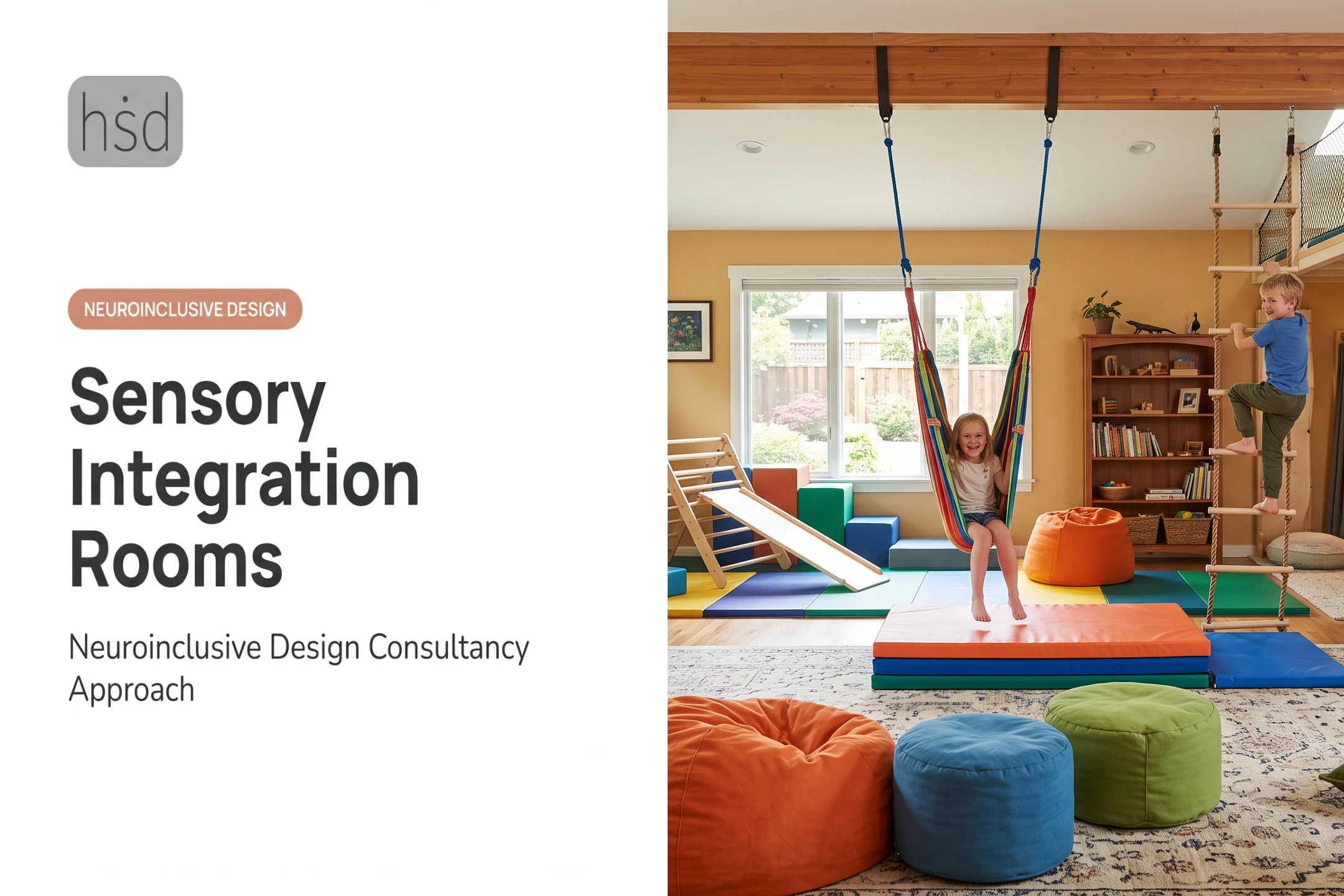
Sensory load builds up from sources most people never notice: reverberating hallways, flickering fluorescent lights, lingering cleaning-product odors, and visual clutter on every wall.
In a mod/severe classroom, that buildup can block communication, regulation, and engagement.
Start With Acoustics and Light
The American Speech-Language-Hearing Association recommends measuring background noise, reverberation time, and signal-to-noise ratio, then comparing results against ANSI/ASA S12.60 school-acoustics criteria before selecting finishes. Acoustic treatment is far cheaper to plan during design than to retrofit later.

For lighting, prioritize:
- Dimmable, controllable fixtures over fixed-brightness panels
- Shaded or diffused natural light to reduce glare
- Elimination of visible flicker, especially near workstations
Build in Predictability
Consistency reduces the cognitive load of figuring out "what happens next." Practical ways to do this:
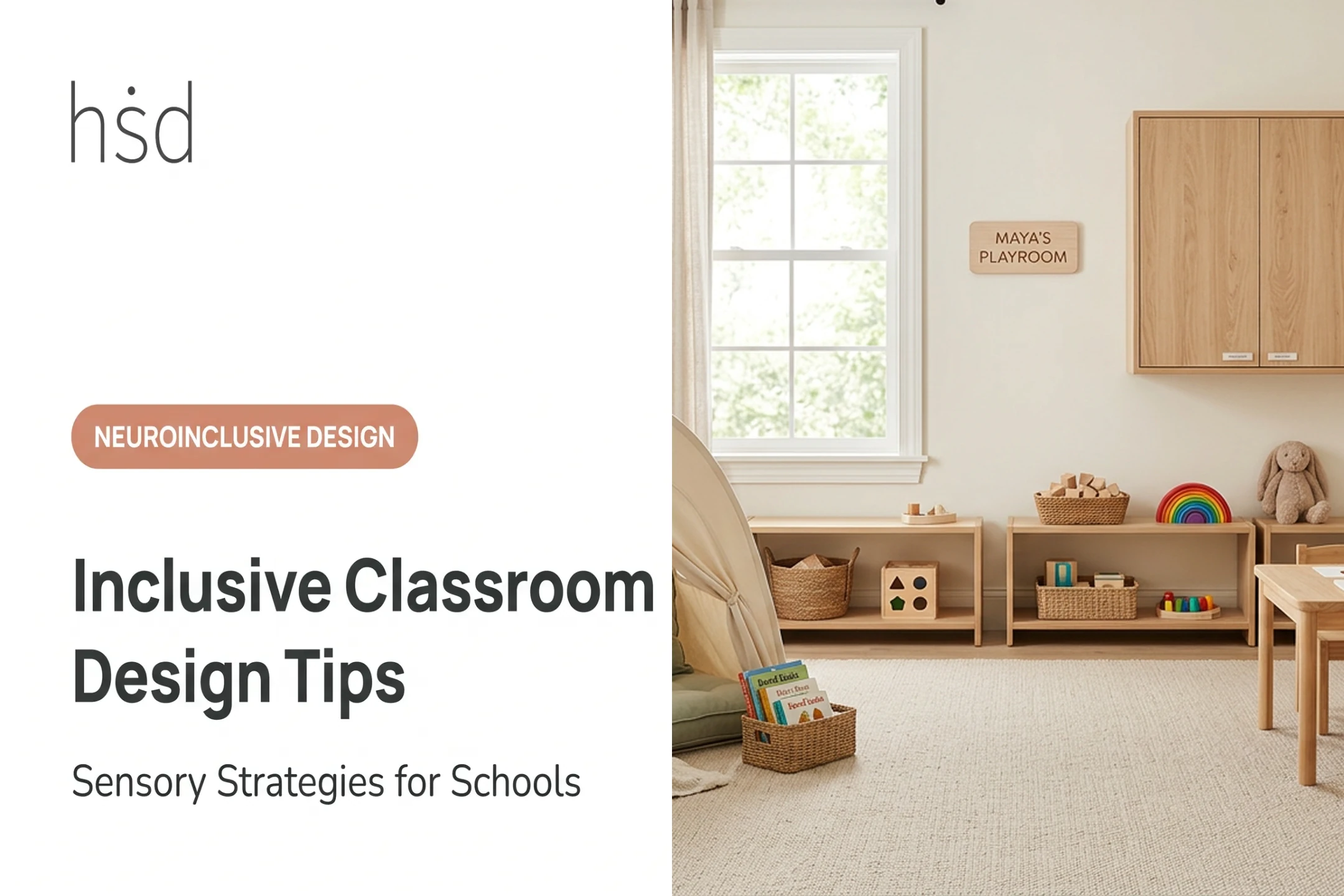
- Keep furniture placement consistent across the week
- Use visual schedules and transition cues at eye level
- Maintain clear sightlines so students can anticipate movement
- Label storage so materials are findable without asking
Protect Mobility and Physical Access
The 2010 ADA Standards require a 30-by-48-inch clear floor space and a T-shaped turning space within a 60-by-60-inch square for wheelchair users. Beyond code minimums:
- Keep frequently used materials within easy reach
- Route paths away from crowded, high-stimulation zones
- Preserve clear circulation between primary activity areas
Those same clear paths should lead somewhere useful when a student needs to regulate.
Design the Break Space Carefully
A regulation or break area should be voluntary whenever possible, physically safe, and visibly different from a punishment space. Depending on individual plans and professional input, it may include:
- Privacy or a partial visual break from the main room
- Low stimulation and simple quiet
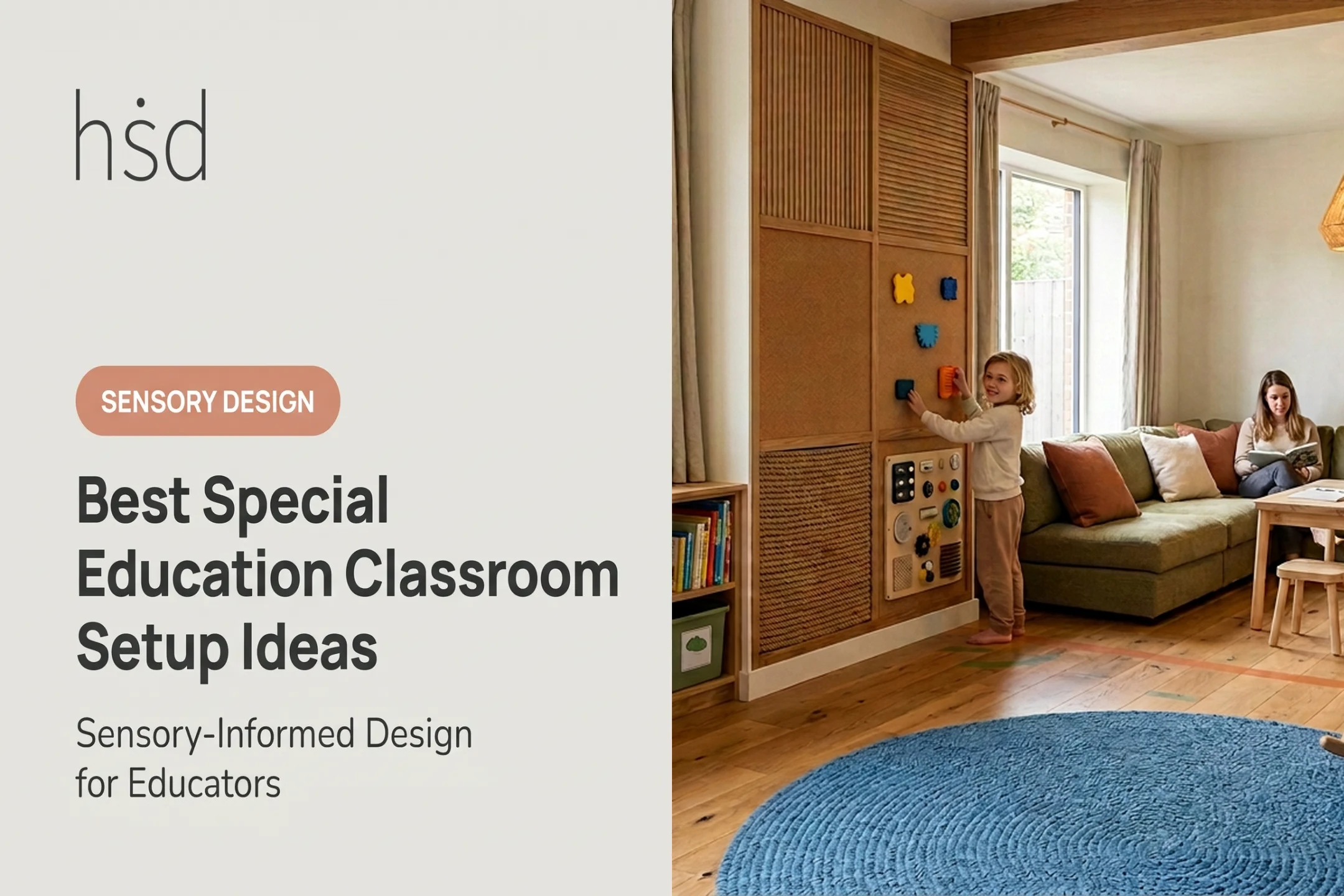
- Movement options or deep-pressure input
Material choices matter here too. Durable, low-odor, easy-to-clean surfaces cut chemical sensitivity triggers and long-term maintenance issues.
Highly Sensitive Design's sensory environment assessments map lighting, ventilation, temperature, accessibility, and code factors in an existing room, then deliver drawings and a report schools can use for renovation or new-construction planning. The work is a design resource—not a substitute for IEP or clinical decision-making.
Planning the Classroom Layout and Functional Zones
Before buying a single piece of furniture, map the room's actual routines and the moments that break down. That audit tells you far more than a Pinterest board ever will.
Trace a full day across:
- Arrival and dismissal
- Instruction and transitions
- Meals, toileting, and hygiene
- Therapy and movement breaks
- Friction points where staff scramble or students stall
There is no single national zoning standard for mod/severe rooms. Use the routine audit to build an IEP-linked zone plan:
| Zone | Purpose | What to Watch |
|---|---|---|
| Instruction | Teacher-led lessons, small groups, flexible seating | Engagement, access to IEP goals |
| Communication / independent work | AAC storage and charging, low-distraction stations | Independent attempts, task completion |
| Life skills / functional practice | Self-care, classroom jobs, daily routines | Skill generalization across settings |
| Regulation / safety | Voluntary retreat space with supervision | Recovery time, return to task |
| Circulation | Wheelchair turning, transfers, clear exits | Access, near-miss incidents |
Instructional and Communication Zones
The instructional zone has to support several levels of teaching at once. If everything depends on one whole-class format, someone is waiting.
Build in:
- Adaptable seating for group, paired, and 1:1 work
- Clear teacher sightlines across stations
- Space to shift groupings without rebuilding the room
- Materials staged so students can start without idle downtime
The communication and independent-work zone should include:
- Accessible AAC charging stations and device storage
- Low-distraction individual workstations
- Task boxes or adapted materials matched to current goals
- Visual completion cues that signal "done" without staff prompting
Life Skills and Regulation Zones
Life-skills areas work best when everyday routines count as instruction, not filler time. Meal prep, hygiene practice, and classroom jobs belong here on purpose.
Protect the non-negotiables:
- Privacy for toileting and changing
- Health and safety rules for food and hygiene tasks
- Enough room for staff support without crowding the student
Regulation, movement, and therapy areas should sit near the action without living in the traffic lane. Give staff fast sightlines, add partial screening so the space does not read as exile, and leave a clear path back into instruction once a student is ready.
Connecting Classroom Design to Instruction, Communication, and Independence
A well-designed room should make each student's IEP goals easier to practice, not just easier to store materials for. Design should support goals across:
- Functional communication and self-advocacy
- Literacy, numeracy, and fine-motor skills
- Mobility and daily living skills
AAC Access Everywhere, Not Just at "The Communication Table"
ASHA's guidance on augmentative and alternative communication calls for multimodal support (no-tech, low-tech, and high-tech) available across every school environment, not confined to a single station. In practice, that means:
- Devices and symbol boards travel with the student, not just sit in one corner
- Communication partners get sightlines, wait time, and space to respond
- Backup low-tech options exist in case a device needs charging or troubleshooting
Visual Systems, Used Deliberately
Visual supports make routines clearer when they are individualized and taught—not only posted. Common tools include:
- Color coding and first-then boards
- Object cues
- Task analysis strips
A 2018 study of three students with severe disabilities found that systematically teaching visual supports for multi-step tasks increased independent task completion for each participant.

The takeaway isn't "add a visual schedule and independence follows automatically." Visual supports work when they're taught with intention and tracked over time.
Rotations That Balance Multiple Needs
Once supports are taught, centers and rotations give students repeated chances to use them across the period. Blend teacher-led instruction, therapy collaboration, peer interaction, independent work, and sensory regulation—then differentiate per learner.
Adjust for each student rather than one format for all:
- Task length and prompting level
- Response mode and materials
Data collection ties it together. Track things like:
- Transition participation and time
- Independent task completion rate
- Communication attempts per session
- Frequency and length of dysregulation episodes
Use that data to refine instruction and the environment. If a corner consistently produces dysregulation, that's a design signal, not just a behavior data point.
Setting Up and Evaluating the Classroom
Putting these design principles into a working classroom takes a clear sequence. A rushed one-weekend overhaul usually creates new friction instead of removing it.
- Gather profiles and input - Collect student needs, staff observations, and family priorities
- Identify barriers and triggers - Note where transitions break down or overload spikes
- Draft a zoning plan - Map instruction, communication, life skills, and regulation areas
- Check accessibility and safety - Verify circulation space, sightlines, and code compliance
- Introduce changes gradually - Avoid overhauling everything at once
- Document what happens - Track outcomes against the plan

Who Should Join the Planning Review
A collaborative review works best with special educators, paraprofessionals, related-service providers, administrators, families, and students when possible. Medical, behavioral, mobility, and sensory interventions should always follow the recommendations of qualified professionals, not a design preference.
Highly Sensitive Design's neuroinclusive consulting work with schools follows this same collaborative model. NYC's public school NEST program is a useful reference: one shared learning environment can support neurodivergent and neurotypical students without segregating either group.
A Quick Evaluation Checklist
- Can students locate materials independently?
- Can they communicate across every zone, not just one?
- Are transitions predictable?
- Is the break space used as support, not punishment?
- Can staff supervise safely from typical positions?
- Which specific changes appear to improve access or independence?
Review these questions on a regular cycle, not just once after the room opens.
Frequently Asked Questions
What is a moderate to severe special education classroom?
A moderate to severe special education classroom serves students who need intensive, individualized support in academics, communication, adaptive skills, behavior, sensory processing, or health. Definitions and placement models vary by state and district.
What are moderate to severe disabilities?
It refers to substantial support needs in learning, communication, adaptive functioning, mobility, or behavior—often in more than one area. It is not a single diagnosis; rely on the student’s evaluation and IEP team documentation.
What does "mod" mean in education?
"Mod" is shorthand for "moderate," most often seen in phrases like "moderate/severe special education." The exact meaning and program labels differ across school systems, so always confirm local usage with your district.