
Introduction
Every autistic student experiences a classroom differently. What overwhelms one child barely registers for another, and a strategy that helps one student regulate might do nothing for the next. Effective autism classroom strategies start with the individual, not a scripted formula.
Many educators hit the same walls:
- Sensory overload from fluorescent lights or hallway noise
- Unclear expectations about what happens next
- Communication mismatches between how a lesson is delivered and how a student best receives it
- Rocky transitions between activities
- Assignments that ignore a student's actual strengths
These barriers show up often. In one population study of 8-year-olds, sensory abnormalities were reported for 53.6% of children with autism, compared with just 8.0% of children without autism, according to an epidemiological study published in 2019. Sensory differences aren't a side issue in an autism classroom—they're often the main event.
This guide walks through practical levers you can use right away:
- Sensory-aware classroom environments
- Predictable routines and clearer transitions
- Accessible communication and individualized instruction
- Regulation support and inclusive placement
- Collaboration between families and specialists
Key Takeaways
- Visual structure, clear zones, and predictable routines clarify expectations and build independence.
- Match sensory accommodations and communication tools to each student—not a uniform checklist.
- No autistic student should have to communicate or behave one "correct" way to access learning.
- Review and adjust supports regularly with families, educators, therapists, and students.
Design the Physical Classroom Around Sensory Access and Independence
A classroom that looks perfectly fine to an adult can be a minefield of triggers for a sensory-sensitive student. Layout decisions aren't cosmetic. They directly affect whether a student can focus, self-regulate, or even stay in the room.
Start With a Sensory Assessment
Before rearranging furniture, take stock of what's actually happening in the space:
- Lighting type, brightness, and flicker
- Ambient sound, echo, and reverberation
- Foot traffic patterns and crowding during transitions
- Textures students touch throughout the day
- Visual clutter on walls and shelves
The ASPECTSS design framework recommends controlling background noise, separating high- and low-stimulus functions, and organizing materials to cut down on visual distraction. Those controls often decide whether a student can settle into a task at all.
Zone the Room With Purpose
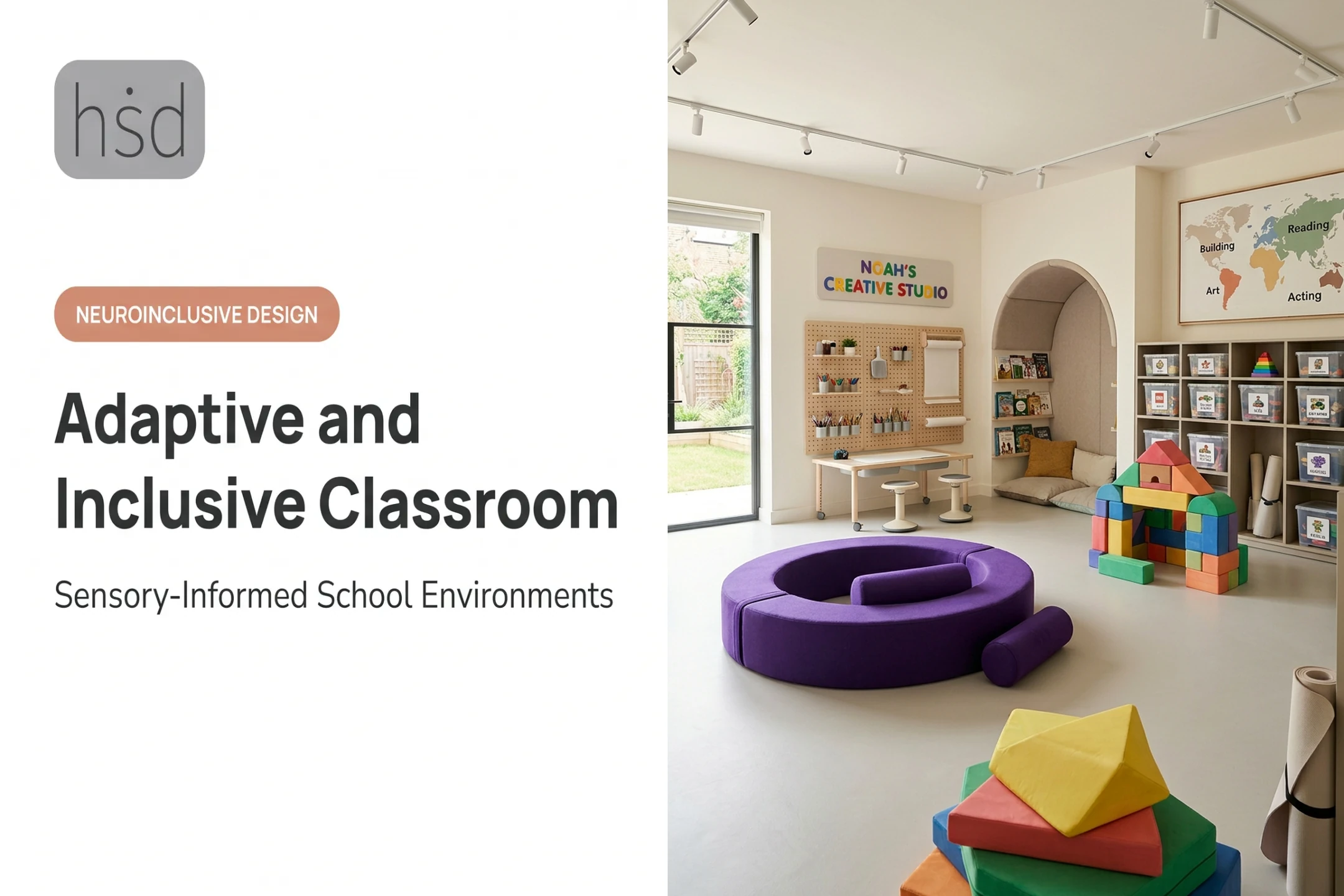
Divide the room into recognizable zones: whole-group learning, independent work, collaborative work, play or interest-based learning, storage, movement, and a voluntary calm-down or regulation space. Furniture placement and visual cues can mark each zone without a single wall going up.

Layout choices that support independence:
- Keep walkways clear and boundaries defined with rugs or furniture
- Label storage so materials are easy to find without asking
- Offer seating choices instead of fixed assignments
- Place furniture to block distracting sightlines to doors and windows
Reduce Sensory Load Where It Counts
Small adjustments compound quickly:
- Dimmable or natural lighting
- Rugs or acoustic panels to cut noise
- Headphones available for students who want them
- Rotating wall displays instead of covering every surface
- Seating placed away from high-traffic paths
When a renovation or new classroom goes beyond what staff can rework alone, outside design support helps lock in those choices early. Schools, therapy clinics, and project teams can work with Highly Sensitive Design on a neurodivergent design consultation—tiered by project scope, with 30-minute sessions starting around $250—to map sensory-aware, independence-ready floor plans before construction begins.
Build Predictable Instruction, Routines, and Communication
Predictability doesn't mean rigidity. It means a student can anticipate what's coming next, which frees up mental energy for actually learning.
Make the Day Visible
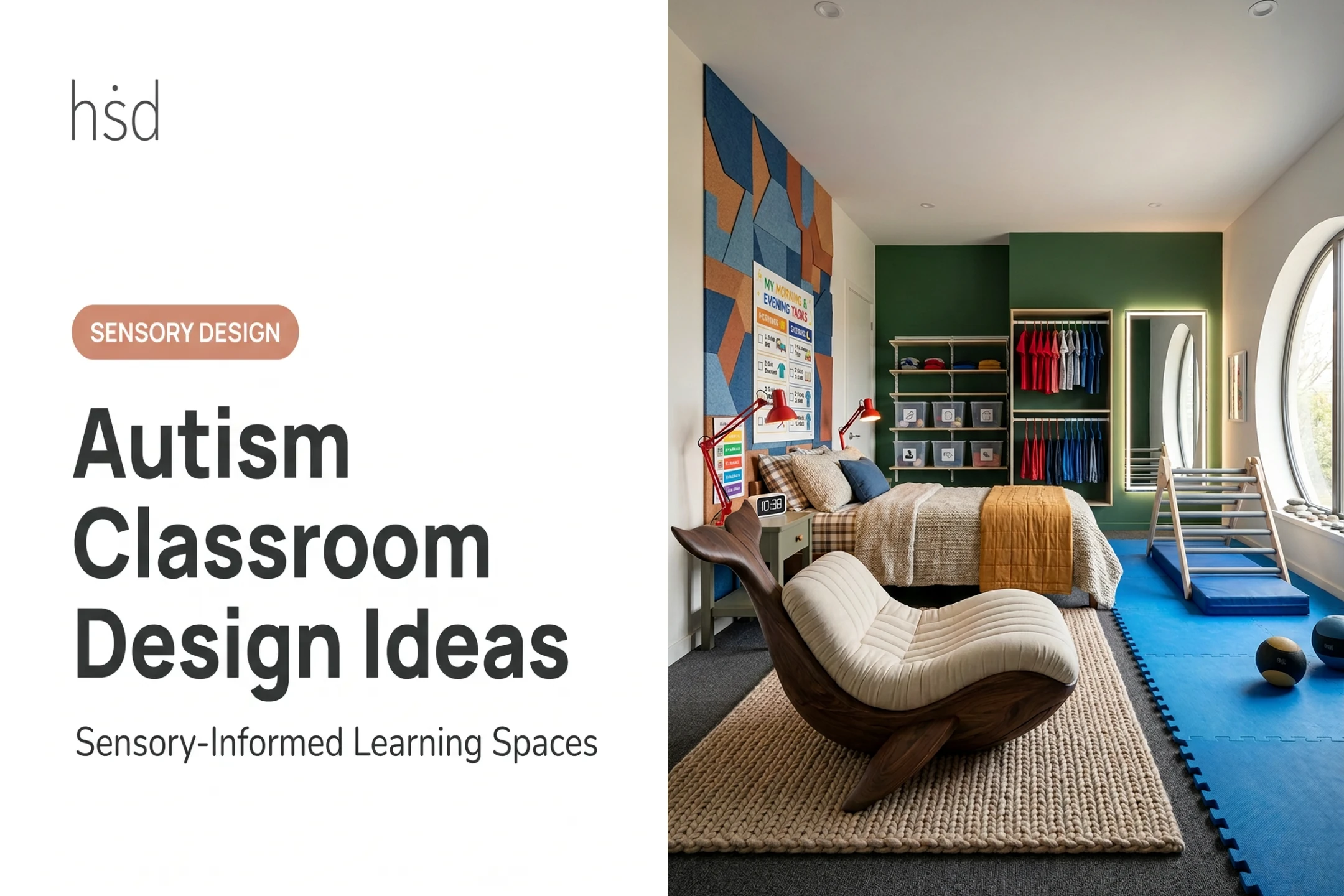
Visual schedules, first-then boards, activity sequence cards, timers, and transition warnings all serve the same purpose: turning an abstract day into something a student can see and plan around. Add a clear "finished" system so students know when a task is truly done, not just paused.
When giving directions, keep it concrete:
- Get attention without forcing eye contact
- Give one step at a time when needed
- Demonstrate the task instead of only describing it
- Allow processing time before repeating or rephrasing
- Confirm understanding through the student's preferred communication method
Meet Every Communication Style
Communication support is whichever mix works for that student: AAC devices, picture systems, gestures, writing, typing, sign language, objects, or speech. Keep those tools available all day, not just during a designated "communication time."
Break assignments into manageable steps, and let students demonstrate learning in more than one way. Speaking, pointing, selecting, drawing, typing, using manipulatives, or completing a hands-on task can all show the same understanding.
Preschool Activities That Flex to Different Needs
That same flexibility carries into early childhood, where adaptable activities work best for young autistic learners:
- Matching and sorting games
- Sensory-safe art projects
- Movement songs with simple, repeated cues
- Play-based turn-taking
- Simple cooking or snack routines
- Object-based communication activities
- Interest-led exploration time
Adjust the demands, not the activity itself. A student who needs more support might sort two categories instead of five, or communicate through an object exchange instead of a full sentence. The room matters too: Highly Sensitive Design's sensory interior design work shapes child-friendly spaces for this kind of play, decompression, and movement around each child's developmental profile.
Support Regulation, Transitions, and Positive Participation
Not every difficult moment is misbehavior. Before responding, figure out what's actually happening.
Look Past the Behavior
Ask what the student may be showing you:
- Communicating distress
- Experiencing sensory overload
- Running out of energy
- Struggling with task difficulty
- Expressing an unmet need
Each of these looks different from intentional defiance, and each calls for a different response.
A voluntary regulation area helps here. It should be:
- Quiet and easy to access
- Appropriately supervised, not isolating
- Stocked with individualized supports (weighted items, fidgets, dim lighting)
This space is never a punishment, a form of isolation, or something a student has to earn.
Build In Regulation and Transition Support
Transitions go smoother with advance notice, visual or verbal countdowns, transition objects, and consistent "change" language. Extra preparation matters even more for substitutes, assemblies, fire drills, field trips, and any break from the usual schedule.
Social stories are especially useful for these moments. When Highly Sensitive Design supports a classroom sensory redesign, personalized recommendations may include social stories that help nonverbal students and peers rehearse a new layout, routine, or larger schedule change.

Teach Self-Advocacy, Not Compliance
Students need real ways to speak up without relying on speech, including ways to:
- Request a break
- Ask for help
- Say no
- Choose a sensory support
- Flag discomfort
Reinforcement should match those goals. Recognize effort, communication, engagement, recovery, and flexibility—not only compliance with a demand that may be distressing or unsafe.
Plan Inclusion and Collaborate With Families and Specialists
Placement decisions shouldn't hinge on a diagnosis label. They should hinge on the individual student.
Choosing the Right Placement
A general education, specialized, or blended classroom setting should match the student's communication, learning, sensory, social, and safety needs.
Under federal special education regulations, schools must educate students with disabilities alongside nondisabled peers to the maximum extent appropriate. Separate settings come into play only when regular classrooms with supplementary supports genuinely can't work.
Some schools, including public programs with dedicated tracks for neurodivergent and neurotypical students learning side by side, show that inclusion doesn't require choosing one environment over another. It often means building the right supports into a shared one.

Team Collaboration and Documentation
Consistent support across settings depends on the whole team staying aligned:
- General and special education teachers
- Paraprofessionals
- Speech-language pathologists and occupational therapists
- Administrators and caregivers
Document what's actually working and review it through the student's IEP or 504 Plan. Base those reviews on participation, access, well-being, and independence, not compliance alone.
A Sensory Environment Assessment gives the team a shared, evidence-based starting point. It examines sensory, spatial, and operational conditions across the classroom before placement and support decisions get locked in.
Frequently Asked Questions
What should an autistic classroom look like?
There's no single required look. Aim for a flexible, predictable room with defined zones, accessible communication tools, visual supports, an optional regulation space, and accommodations matched to that group of students.
Should a child with autism be in a regular classroom?
That depends on the student's goals, communication needs, sensory profile, and available supports. The IEP team and family decide together, not a default based on diagnosis alone.
What are some effective classroom supports for students with autism?
Core supports include visual schedules, concrete instructions, AAC or other communication tools, sensory accommodations, flexible seating, transition prep, and task breakdowns. Add regulation breaks and steady collaboration between educators and families.
What is the 6 second rule in autism?
This isn't an established, evidence-based autism rule. What matters is allowing genuine processing time before repeating a request, following the student's own communication profile instead of a fixed timer.
What are some suitable preschool activities for autistic preschoolers?
Sensory-safe art, movement songs, matching and sorting games, simple cooking routines, and child-led exploration all work well. Build in communication and regulation supports so the activity stays accessible, not just entertaining.