
Introduction
A student who can't filter out hallway noise, harsh fluorescent light, or the pressure of a group project isn't choosing to disengage. Their nervous system has hit capacity. When sound, light, movement, social demands, or strong emotions exceed a student's ability to self-regulate, learning stops, regardless of how well the lesson is designed.
Quiet rooms and calming rooms exist to address that gap. Done well, they give students a place to pause, name what they need, practice a regulation strategy, and return to class ready to learn.
Done poorly, they become something else entirely: a locked closet, a punishment, or a way to remove a "difficult" student from the room.
This guide breaks down:
- What separates a supportive calming space from an isolating one
- How to design the room, staffing, and routines so students return ready to learn
- Where schools go wrong—and how to run the space responsibly
Key Takeaways
- A calming room is a voluntary regulation support, never a disciplinary consequence or crisis substitute
- Design around students' sensory, developmental, communication, and cultural needs, not a generic equipment list
- Written protocols, trained staff, and student input matter as much as furniture and lighting
- Classroom-level sensory supports should reduce how often students need to leave the room at all
What Is a Quiet or Calming Room in a School?
Schools use several overlapping terms for the same general idea: quiet room, calming room, sensory room, regulation space. There's no single federal definition tying these labels together.
Legally and practically, the label on the door matters less than how the space works: it should be voluntary, supervised, and exit-accessible.
The intended sequence is straightforward:
- A student or staff member recognizes early signs of dysregulation or sensory overload
- The student accesses the space through an established process
- The student uses selected tools or strategies to regulate
- The student returns to learning when ready

Calming Room vs. Seclusion Room
This distinction is the one schools cannot afford to blur. The U.S. Department of Education's Office for Civil Rights defines seclusion as involuntary confinement alone in a room the student is physically prevented from leaving. A calming space is built to reverse that setup: the student chooses to enter, stays supervised, and can leave.
Washington State's 2025 guidance on restraint and isolation draws the same line. Voluntary quiet spaces used for self-calming are excluded from isolation when the student isn't locked in or blocked from leaving.
Rules on restraint, seclusion, and supervision still vary by state and district. Schools should confirm their own state's requirements rather than assume one policy applies everywhere.
Who might benefit from a calming room:
- Autistic students managing sensory overload
- Students with ADHD experiencing sensory over-responsivity
- Anxious or traumatized students needing a moment to reset
- Any student temporarily overwhelmed by noise, crowding, or conflict
Not every student wants the same input. Some need dim light and stillness; others need movement or pressure. A calming room supports regulation, but it doesn't replace an IEP, a behavior support plan, counseling, medical care, or a school's crisis response procedures.
How to Design a Calming Room Around Student Needs
Start with people, not products. Run a needs assessment with students, families, teachers, special education staff, counselors, and occupational therapists where available.
That process surfaces common triggers, preferred regulation strategies, and realistic usage patterns before a single chair gets ordered.
Sensory Environment Domains
The core sensory domains to plan for:
- Sound: Use acoustic treatment, soft-close hardware, and distance from mechanical noise or corridors; offer hearing protection as an option, not a default.
- Light: Provide adjustable, non-glare lighting with brightness control—one dim level or single palette will not calm every student.
- Materials: Choose durable, low-odor, easy-to-clean surfaces that meet fire-safety and infection-control standards.
- Seating and positioning: Offer floor, upright, supportive, and movement-based options, checked for tipping, entrapment, and allergy risks.
Keep tools limited and organized so the room stays visually calm:
- Tactile items
- Drawing materials
- A visual timer
- Grounding prompts
- Quiet movement options
Assign weighted or pressure tools individually. Do not leave them out as a grab-and-go default.
Accessibility and Dignity
Accessibility belongs in the same plan as sensory comfort. The 2010 ADA Standards require a 30-by-48-inch clear floor space at accessible elements and a 60-by-60-inch turning space for wheelchair users.
Beyond code minimums, plan for:
- Clear routes, accessible controls, and appropriate seating heights
- Visual schedules and symbol-based instructions for nonspeaking or minimally speaking students
- Staff sightlines and privacy features that protect dignity without creating hidden, unsupervised corners
Design should also match the age group. Elementary, middle, and high school rooms need different aesthetics and technology, and student input should shape each one.
Before you finalize finishes or furniture, test the room with representative users. Adjust based on what they find calming, not what looks calming on a mood board.
Schools in a larger renovation often add neuroinclusive design consultation at this stage. Highly Sensitive Design, based in Brooklyn and working with schools within about a two-hour drive of New York City, offers a Sensory Environment Assessment that reviews spatial, sensory, and accessibility conditions before design begins.
Policies and Practices That Keep the Room Supportive and Safe
Furniture doesn't make a calming room safe. Policy does. Every school using one needs a written purpose and eligibility framework covering who may request the room, how staff can offer it, and how long a typical visit lasts.
Build an access and supervision protocol that spells out:
- Who authorizes or accompanies use, and how a student signals they need a break
- How privacy and supervision coexist, using sightlines, check-ins, or open-door approaches where suitable
- What happens if distress escalates, including a clear handoff to the school's trained crisis-response team
This last point matters most. A calming room supports regulation. It is not a substitute for restraint protocols, seclusion procedures, or emergency intervention when a situation genuinely escalates beyond self-regulation.
Train everyone, not just the students who use the room. That means modeling tools when students are calm, explaining expectations without shame, and briefing substitute teachers so a new adult in the building doesn't undo months of consistent practice.
The room should function as neither reward nor punishment. Withholding access as a consequence, forcing a student to use a specific tool, or letting a break stretch into indefinite avoidance all undermine the point.
A short re-entry process—a check-in, a visual readiness cue, and access to missed work—helps students transition back without added pressure.
Track usage patterns: requests, wait times, duration, and repeat triggers. The goal is improving the environment, not building a behavior file on individual students.
Benefits and Limitations of School Calming Rooms
When implementation is solid, the payoff is real. Washington's 2025 legislative report found that one district reduced reported isolation-room use by 78% in a single school year after replacing isolation practices with supervised sensory spaces. Beyond that, well-run rooms tend to support:

- A predictable, low-stimulation setting for practicing self-regulation
- Reduced escalation before it reaches crisis level
- Greater emotional vocabulary and readiness to return to learning
But the room itself isn't magic. Benefits track directly to implementation quality, not square footage.
A 2026 peer-reviewed study of autistic secondary students using school multisensory environments found students valued flexibility and adaptable equipment. Researchers noted the sample was small and sessions were brief, so results shouldn't be overstated.
Limitations worth naming honestly:
- The room can become overused if it's the only regulation tool a school offers
- Poor access rules make it unavailable exactly when a student needs it most
- Cost and maintenance add up if lighting, seating, and tools aren't chosen for durability
- Overuse without classroom-level changes just relocates the problem instead of solving it
A calming room is not treatment. It doesn't replace occupational therapy, counseling, special education services, or medical care, and schools shouldn't market it as if it does.
How to Make the Room Part of an Inclusive School Environment
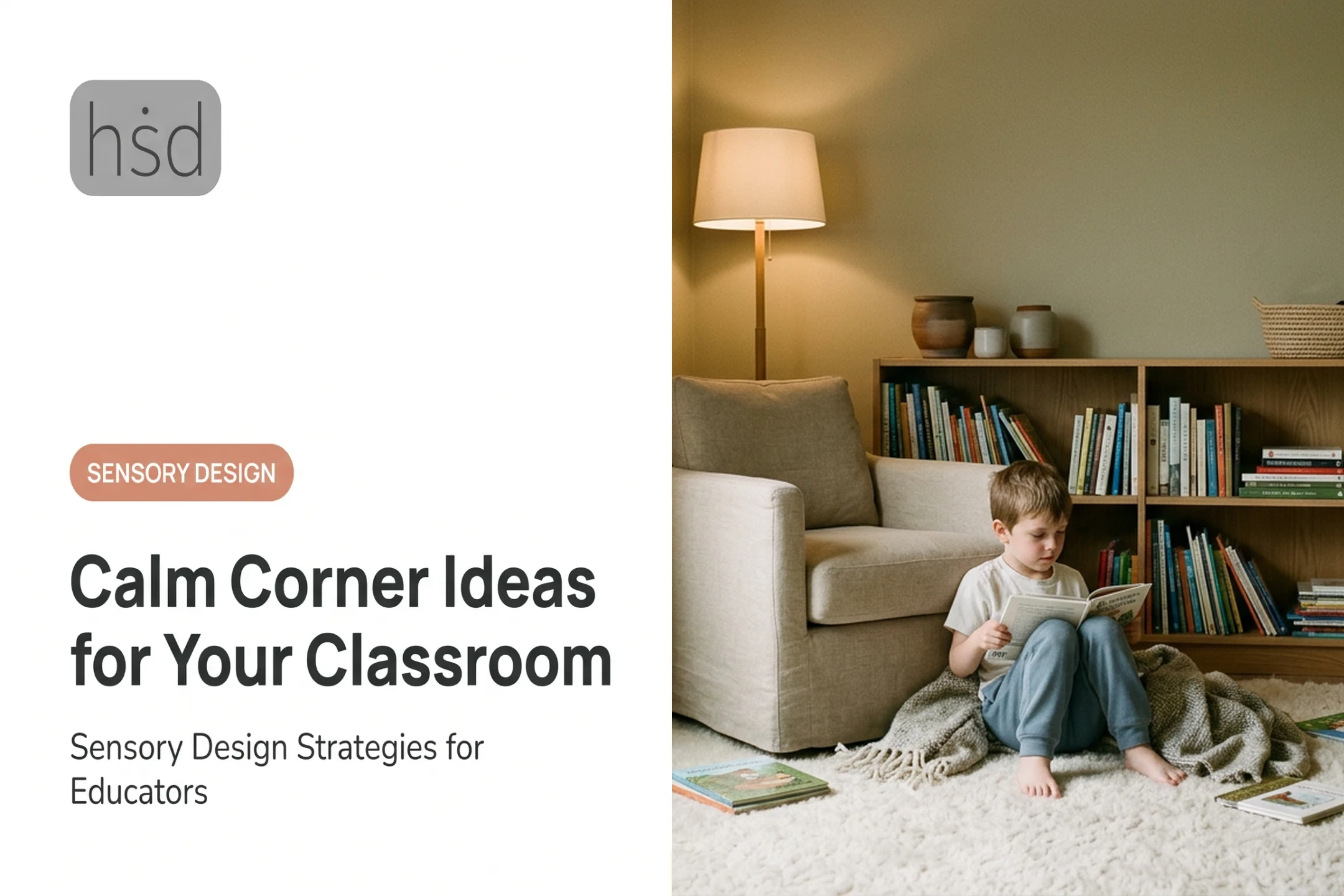
A calming room works best when it's the backup plan, not the default. Classrooms should already offer flexible seating, reduced visual clutter, movement choices, and predictable routines, so students aren't forced to leave the lesson to access every regulation support.
This mirrors the multiple-means approach in CAST's UDL Guidelines, which frame flexible environments as a baseline for access, not an accommodation for a few.
Frame regulation as a whole-school skill. Tying the room to one diagnosis or a "problem student" reputation guarantees stigma and discourages use by students who need it. Different students need different supports at different times, sometimes the same student on different days.
Once the room is framed as a shared tool, check whether access is actually equitable:
- Are certain students referred more often than others?
- Does access differ by age or disability status?
- Is the room located near the disciplinary office, sending an unintended message?
- Does staff language around the room shame students who use it?
A practical rollout sequence:
- Audit current needs, incidents, spaces, and policies
- Define the room's purpose, budget, staffing, and success measures
- Co-design and test the space with students, then train staff and inform families
- Review usage patterns on a set schedule and adjust the room, classroom supports, or policy accordingly

Schools translating individual student needs into a functional, code-compliant space often work with a design partner. Highly Sensitive Design's neurodivergent design consultation, for example, has supported public school programs including NEST classrooms, where neurodivergent and neurotypical students learn in the same setting. That work gives project teams practical guidance on sensory, cognitive, and behavioral design.
Frequently Asked Questions
What is the purpose of a quiet room?
It offers a supportive, low-stimulation place where a student can pause, regulate, and prepare to return to learning. It should never function as punishment or locked seclusion.
What is the difference between a calming room and a seclusion room?
A calming room is voluntary and supervised, and the student can leave whenever they choose. Seclusion involves involuntary confinement. Check your state and district policy, since rules vary.
What should be included in a school calming room?
Core elements usually include adjustable lighting, acoustic control, comfortable accessible seating, a limited set of regulation tools, visual supports, safe materials, and a clear supervision plan.
Who can use a school quiet room?
Access should be based on identified student needs and a transparent school-wide policy, not limited to one diagnosis or used in a way that stigmatizes students.
Should a calming room be locked or unsupervised?
No. A supportive calming room should never be locked isolation. Schools need a documented supervision plan that meets applicable state and federal student-safety requirements.
Does a calming room replace classroom accommodations?
No. It complements inclusive classroom design, IEPs, teaching support, counseling, and crisis procedures. It's one part of a broader support system, not a stand-in for it.