
Introduction
Most home organization advice assumes a brain that remembers where things go, follows routines automatically, and doesn't get derailed by a pile of mail. That's not how ADHD works.
An ADHD-friendly home is built for how attention, memory, task initiation, and regulation actually work—not for a Pinterest-perfect, minimalist look. The goal is simple: daily life that takes less mental effort.
An estimated 7 million US children ages 3–17, or 11.7%, currently have an ADHD diagnosis, according to CDC data. Add millions of undiagnosed and adult cases, and the odds are high that ADHD affects someone in your household right now.
This guide walks through a practical process: find where your home creates friction, design around how people actually behave, and choose storage that supports memory instead of testing it. You’ll also build in cues that keep maintenance sustainable, even on hard days.
Key Takeaways
- Match design to the person's routines, sensory needs, and energy levels, not a generic checklist.
- Give every item a visible, easy-to-reach home to cut memory and start-up friction.
- Use selective visibility: open storage helps some items and overwhelms others.
- Build short resets and flexible zones so the system holds up on low-energy days.
- Call in design or clinical pros for structural work, safety issues, or ongoing struggles.
How to Create an ADHD-Friendly Home: A Step-by-Step Process
Skip the full-house overhaul. This process works room by room, starting with what's actually breaking down.
Step 1: Identify Where the Home Creates Friction
Walk through a typical day and note where things fall apart:
- Keys go missing every morning
- Items get "lost" the moment they're placed in a closed drawer or bin
- Laundry gets started but never finished
- A room feels unbearable to sit in because of noise or clutter
- Transitions between activities (homework to dinner) trigger a meltdown or shutdown
Each of these points to a specific barrier: poor visibility, too many decisions, inconvenient placement, sensory overload, or a routine with too many steps.
Don't try to fix everything at once. Pick one or two high-impact friction points first. Redesigning the whole house at once usually means nothing gets finished.
Step 2: Design Around Actual Routines and Natural Drop Zones
Watch where things actually land—not where they "should" go. Shoes by the couch. Mail on the counter. A backpack dropped in the hallway. These aren't failures; they're data about where a landing zone belongs.
Common zones worth building:
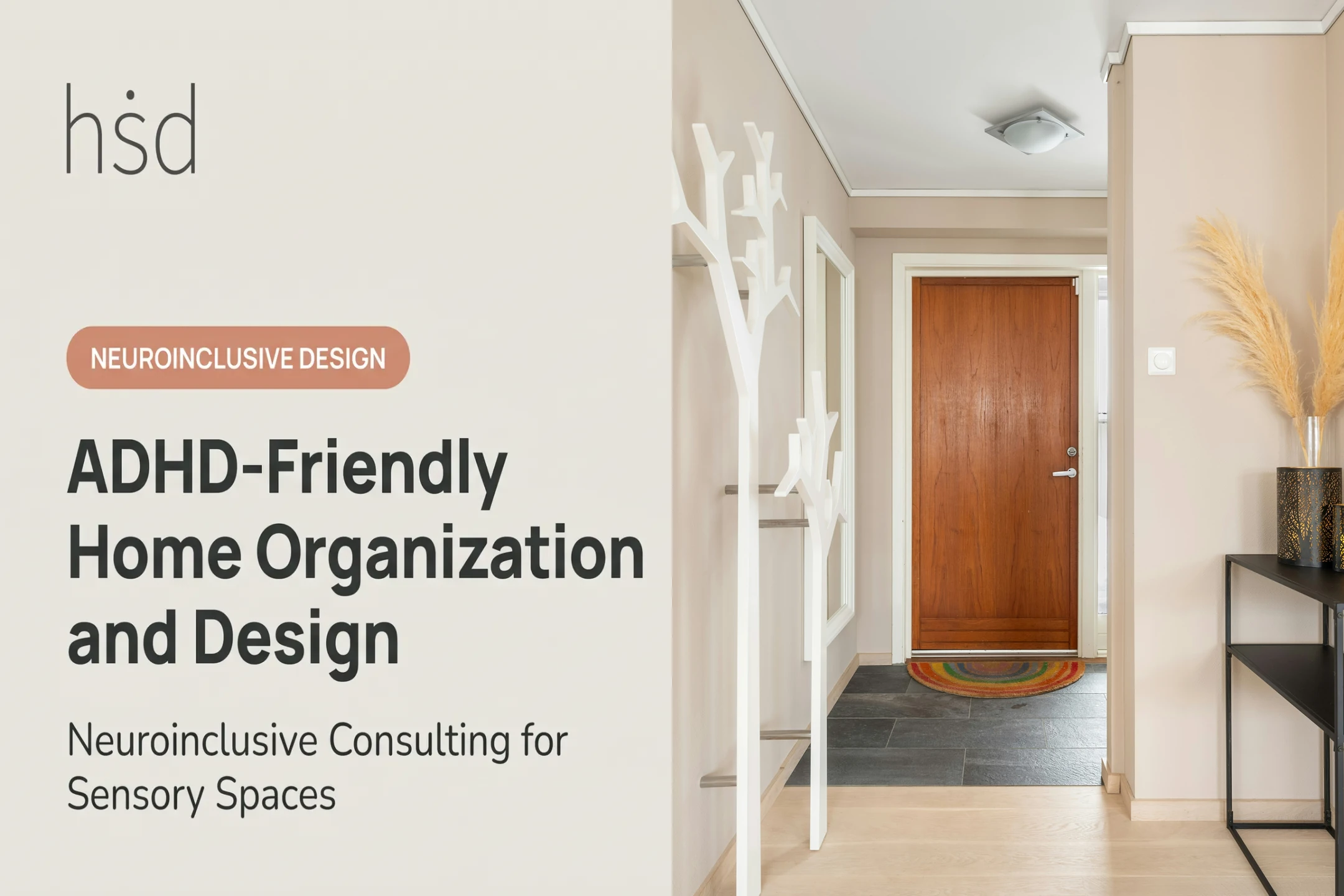
- Entry launch pad — a small table or shelf near the door for keys, wallet, and glasses
- Bedroom clothing zone — hooks or an open hamper right where clothes actually get taken off
- Paper action area — one visible spot for mail, forms, and to-do items
- Kitchen reset area — a tray or basket for whatever tends to pile up on the counter
CHADD's guidance on organizing home and office space recommends exactly this kind of entry-area setup, plus keeping frequently used items within easy reach so put-away takes fewer steps.
Step 3: Choose Storage That Supports Memory Without Creating Visual Overload
This is where most systems succeed or fail. The wrong storage choice either hides items people forget exist, or exposes so much that the room feels chaotic.
| Storage Type | Best For | Watch Out For |
|---|---|---|
| Open shelves, clear bins | Items forgotten when hidden (medications, chargers, school supplies) | Can look cluttered if overused |
| Baskets, trays, curtains | Items that overstimulate when visible (toys, cables, papers) | May hide things that need daily visibility |
| Closed cabinets or drawers | Backup stock and rarely used items | Easy to forget contents without bold labels |
Skip anything with complicated lids or overly narrow categories. If putting something away takes more than two steps, it won't happen consistently. Pair storage with large, simple labels so a quick visual match replaces reading a full list of categories.
Step 4: Add Cues for Focus, Regulation, and Maintenance
Externalize reminders instead of relying on memory. Whiteboards, visible schedules, color-coded bins, and timers all do the job memory alone can't.
Storage and labels still depend on memory under stress, so add a dedicated focus or regulation space. Keep it simple:
- Adjustable lighting
- A comfortable seat with room to fidget or move
- Sound control (headphones, a rug, a closed door)
- Only the materials needed for that one activity
Then build in a small, repeatable reset: return items to landing zones and clear one surface before bed. Let the routine flex. A missed day isn't a failed system.

When Should You Use an ADHD-Friendly Home Approach?
These changes matter whenever the home itself is adding stress: increased forgetfulness, task avoidance, transition meltdowns, sensory overload, or ongoing conflict about chores.
Common situations where this approach helps:
- A child's school-morning routine keeps collapsing
- An adult working from home can't sustain focus at their desk
- Medication or bedtime reminders keep getting missed
- Belongings (keys, homework, retainers) go missing constantly
- A shared family space feels tense or overstimulating to everyone
Sometimes a small fix solves the whole problem: relocating the hamper, adding a tray, or swapping a harsh overhead light for something softer. Not every issue needs a full remodel.
Larger changes make more sense when the same struggles show up across multiple rooms, or when they're seriously interfering with daily life.
If you're not sure where to start, a focused session can help. Highly Sensitive Design's 30-Minute Neurodivergent Design Consult ($250) is built for this: one immediate challenge, one practical solution, and no long-term commitment.
What to Prepare Before Changing the Home
Before buying a single bin, run a short inventory of the sensory and routine factors already at play:
- Light, sound, and visual clutter
- Textures, smells, and temperature
- Movement and privacy needs
- Times of day when attention or energy dips hardest
Home and safety basics to confirm first:
- Clear walking paths (no tripping hazards from new furniture or rugs)
- Stable, secure furniture, especially anything a child might climb
- Safe, separate storage for medication and cleaning products
- Adequate lighting in transition spaces like hallways and entries
Materials to gather for your first change only:
- A visible planner or whiteboard
- One tray and one open basket
- Labels and a timer
- A small task light or caddy
Resist buying containers before deciding what actually belongs in the space. That's how closets end up full of empty bins nobody uses.
If you want a more structured starting point, a Sensory Environment Assessment begins with exactly this kind of inventory. It includes a detailed survey and interview about routines, sensory preferences, and goals, then reviews what's functionally and aesthetically getting in the way.
For anything involving structural, electrical, or built-in work, bring in a licensed professional. Environmental changes support daily functioning. They don't diagnose or treat ADHD.
Key Design Parameters That Affect Whether the Home Works
The same storage solution that helps one person can overwhelm another. Outcomes depend on how well each choice matches the individual's working memory, sensory profile, and energy patterns.
Visibility and Visual Load
Visibility supports object permanence and task completion, but only up to a point. Too much exposed clutter creates its own distraction. Selective visibility works better than always-open or always-closed storage. Match the approach to what each specific item needs.
Friction and Number of Steps
Fewer steps win:
- A hook beats a hanger
- A tray beats a drawer
- A room-specific cleaning caddy beats walking to a supply closet three rooms away
Test any new setup on a low-energy day. If it doesn't hold up then, it won't hold up long-term.
Location and Behavioral Fit
Place storage where the behavior already happens, not where an idealized floor plan says it should go. A hamper belongs near the clothing drop zone. A key tray belongs by the door people actually use.
Sensory Conditions
Lighting, sound, texture, and temperature all shape whether a space feels usable or unbearable. A 2023 study surveying 435 parents of children with ADHD found that indoor air, lighting, acoustic, and thermal quality together explained meaningful variance in symptom severity. Thermal comfort was the strongest single predictor.

The study was observational and doesn't prove causation, but it supports paying attention to these conditions rather than dismissing them.
Flexibility and Maintenance
Movable furniture, broad categories, and buffer zones make systems more resilient when schedules or energy levels shift. Rigid systems break the first time life gets busy.
Common Mistakes, Troubleshooting, and Alternatives
When a system fails, the design usually doesn’t match real behavior. Effort is rarely the real problem.
Common Mistakes
- Rooms staged for photos instead of daily function
- Too many containers or overly specific categories
- Items that need to stay visible get tucked out of sight
- Someone else’s minimalist or color-coded system adopted without testing it against your habits
Troubleshooting Common Problems
- Items keep piling up in one spot? Treat that spot as information. Add a landing zone there, or simplify the path back to where the item "should" go.
- Open storage causes distraction? Group items into labeled baskets or add a curtain, while keeping the truly essential items visible.
- Maintenance keeps collapsing? Shorten the reset routine, cut the number of categories, or create a five-minute "low-energy version."

Alternatives and Professional Support
For a single, contained problem, a DIY fix is often enough. When clutter, sensory load, or reset routines span multiple rooms, a professional who understands neuroinclusive design can help you redesign the system—not just the surface.
Highly Sensitive Design provides personalized, sensory-focused consultation shaped around each client’s routines, lifestyle, sensory preferences, and support needs. Broader design-build support is available for larger projects.
Any renovation involving electrical work, built-ins, or structural changes should still go through a licensed contractor or designer.
Conclusion
Creating an ADHD-friendly home comes down to reducing friction, externalizing memory, supporting regulation, and making everyday tasks easier to start and finish.
Start with one high-impact problem. Test the fix on an ordinary day and a hard day. Revise it without guilt when it stops working. Systems need to evolve as routines and needs change.
The most effective home balances function, sensory comfort, safety, and flexibility for the people actually living in it.
Frequently Asked Questions
What are the 10-3 and 30% rules for kids with ADHD?
The 10-3 rule pairs short work bursts with brief breaks; the 30% rule builds in extra time or support versus a typical peer. Both are informal online heuristics, not clinical standards from CHADD, the AAP, or CDC. Treat the numbers as optional guides for manageable intervals and realistic expectations.
What age is hardest for kids with ADHD?
There's no single hardest age for every child. Difficulty often spikes during transitions such as starting school, gaining academic independence, or entering adolescence, as expectations shift. Home supports should evolve at each stage rather than staying fixed.
How can I help my child with ADHD?
Focus on predictable routines, visible reminders, simple storage with a clear "home" for each item, and defined transition zones. Add movement or regulation options, keep feedback positive, and ask your child which environmental changes actually help.